New Games - Page 12612

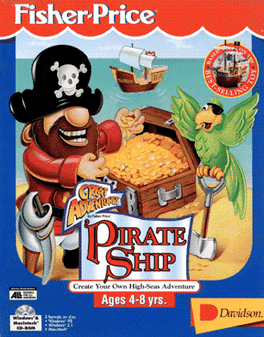
Great Adventures: Pirate Ship
1996
An educational video game based off Fisher-Price's Pirates toy line.Marathon Infinity
1996
Marathon Infinity
1996
star 8.1Marathon Infinity takes the closed universe of the Marathon series and blows it wide open. The solo/co-op campaign, “Blood Tides of Lh’owon,” is a 20-level scenario sporting new textures, weapons, and aliens. More than that, the scenario sheds a surprising new light on the story’s characters and the meaning of events. Having defeated the Pfhor and reawakened the ancient remnants of the S’pht, the player now faces a world where friends become enemies and all is not what it seems…Pokémon Blue Version
1996
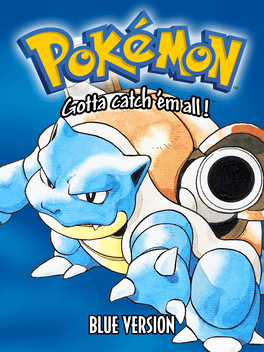
Pokémon Blue Version
1996
star 8.6Pokémon Blue is the third core series Pokémon game released as a minor revision of Pokémon Red and Green, which were released earlier that year. It was thus the first solitary version in the core series of Pokémon games. Various fixes in the game include a graphics and sound upgrade, as well as the removal of several known glitches that had been found in the original pair. Outside of Japan, its graphics, game engine and script formed the basis of Pokémon Red and Blue, while the wild Pokémon and game-exclusive Pokémon lists were changed to match Red and Green.Escape
1996
Escape
1996
The second in the series (Hijack being the first), 'Escape' takes place in a supposed alien space station, which just happens to have a terran space vehicle parked out back.Circle of Blood
1996
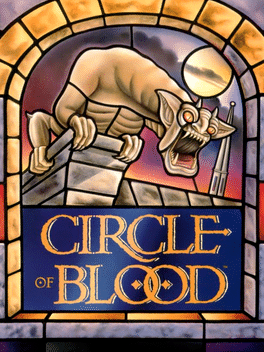
Circle of Blood
1996
star 7.9Circle of Blood is a 2D adventure game played from a third-person perspective. The player uses a point-and-click interface to interact with the environment and to guide protagonist George Stobbart through the game's world. To solve puzzles and progress in the game, the player collects items that may be combined with one another, used on the environment, or given to non-player characters. The protagonist converses with NPCs via dialogue trees presented through "conversation icons" to learn about the game's puzzles and plot. Clues and other information are obtained by clicking on items in the inventory and on objects in the environment. The player navigates with a map, to which new locations are added as the story unfolds. Unlike in most adventure games at the time, the protagonist's death is possible, after which the player starts from the last save point.BS Shin Onigashima: Dai-3-wa
1996
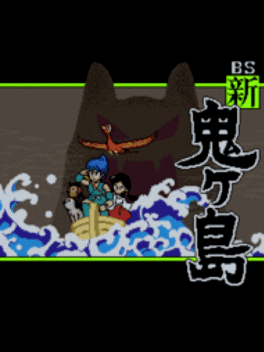
The third episode of BS Shin Onigashima. BS Shin Onigashima is a Downloadable 4-part Soundlink game for the Satellaview that was broadcast in at least 2 distinct runs between September 29, 1996 and January 31, 1996. The game was popular and won its December 1997 rebroadcast through the votes of players in the Third Player's Choice competition. The game came in second (in terms of votes) to BS SimCity: Machi Tsukuri Taikai and so it was broadcast second as a 4-day broadcast. BS Shin Onigashima was a remake sequel to the earlier Shin Onigashima, a game that was released for the Famicom Disk System in September of 1987. The major difference between the two games relate to the SoundLink elements that were introduced for the Satellaview broadcasts. BS Shin Onigashima was later re-made in December 1997 as the commercial release, Heisei Shin Onigashima, for the Nintendo Power system. This was later followed-up by the May 1998 Super Famicom cartridge release of the same name.Fushigi no Kuni no Angelique
1996
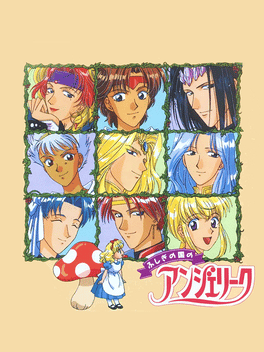
A board and dating sim otome game set in the Angelique universe. It was originally released for PC-FX, and later ported to several other platforms.Star Platinum
1996
Alltynex
1996
Alltynex
1996
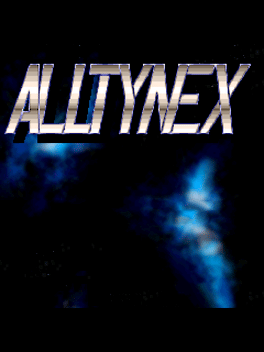
Alltynex was a game exclusively only for the Fujitsu FM Towns computer line. The game was never even featured on arcade cabinet. "Alltynex is a vertically-scrolling shoot' em up. It's a doujin game developed by Satoshi Yoshida in 1996. He entered it in the 2nd ASCII Entertainment Software Contest (also known as A-con) held in 1996 and won the prize in the PC software category. As a result, the game was included on a CD that came with the magazine Login Softcon. In 1997 version 1.01 was released as freeware on the developer's website."Tapestry
1996
Tapestry
1996
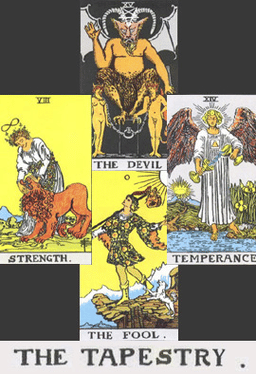
It is a symbol and a tool. It is your past and your future. It is all things, in time. You, Timothy Hunter, have lived, and like all things mortal you have died. But the aftermath of that lifetime is anything but simple... Faced with creatures beyond your ken, the fruition of whose inscrutable motives hinge on your decisions, what will you do? Will you face who and what you once were? Or will you try to change things for the better? Or the worse?Heroine Dream
1996
Heroine Dream
1996
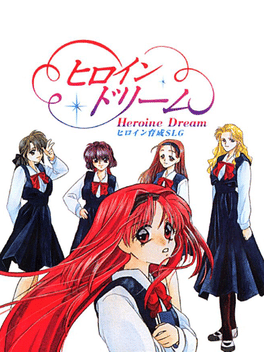
Heroine Dream is an idol simulation game in which the player takes a role of a producer whose goal is to help Shizuka Maiki enter the scene in style. But that doesn't happen over night, in fact, it requires many weeks of training. The heroine herself has many attributes that lack in quality and as her producer, you will have to balance her training (ballet, dancing, swimming etc.), but at the same time keep an eye on her stress level. The game features voice-acting, but without the ability to see subtitles, only the answers you can select during conversations with other characters. Depending on what kind of a star producer you turn out to be, the game may reach one of several different endings.Zoku Gussun Oyoyo
1996
Zoku Gussun Oyoyo
1996
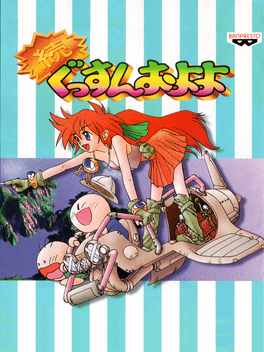
Zoku Gussun Oyoyo is an action puzzle game and a sequel to Risky Challenge. The game plays essentially the same as its predecessor — position falling blocks in a well, Tetris-style, to guide the characters to the exit of each stage — but includes 100 all-new puzzles and several new game modes. Normal and Versus modes are the single-player story and two-player versus modes returning from the previous game; Tsume mode is a dedicated puzzle mode; Climbing mode is an endless climb mode where the goal is to climb upward as far as possible; and Ranking Certification mode is a trial mode where the player must complete a selection of stages to earn higher rankings. The PlayStation and Saturn versions feature slightly different puzzle layouts but are otherwise identical.Mortal Kombat Trilogy
1996
star 6.2Mortal Kombat Trilogy features the same gameplay and story as Mortal Kombat 3, but adds characters and stages from the other three arcade games, including Ultimate Mortal Kombat 3. Some completely new characters were also introduced. New additions to the game included the "Aggressor" bar, a meter that fills during the course of the match and temporarily makes a player character faster and stronger. It also features the Brutality, a long combination of attacks that ends with the opponent exploding.The Magic School Bus Explores in the Age of Dinosaurs
1996
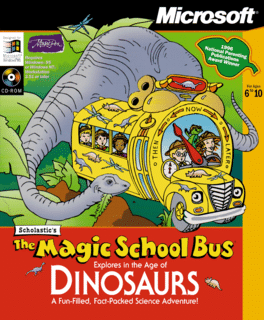
Ms. Frizzle turns the bus into a time machine to more effectively teach her class about everyone's favourite terror lizards.Pyst
1996
Pyst
1996
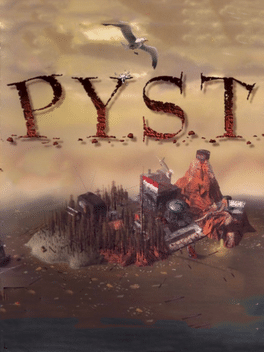
Four million people have explored the world of Myst--and they've turned it into a dump. Dead animals line the docks, windows are smashed in, graffiti is everywhere, and the dignified rocket is down being used to dry clothes. Make your way through the littered landscape of Pyst, aided by the mysterious King Mattruss, and enjoy what is clearly a *parody* of a game, rather than the real thing.BS Shin Onigashima: Dai-2-wa
1996
The second episode of BS Shin Onigashima. BS Shin Onigashima is a Downloadable 4-part Soundlink game for the Satellaview that was broadcast in at least 2 distinct runs between September 29, 1996 and January 31, 1996. The game was popular and won its December 1997 rebroadcast through the votes of players in the Third Player's Choice competition. The game came in second (in terms of votes) to BS SimCity: Machi Tsukuri Taikai and so it was broadcast second as a 4-day broadcast. BS Shin Onigashima was a remake sequel to the earlier Shin Onigashima, a game that was released for the Famicom Disk System in September of 1987. The major difference between the two games relate to the SoundLink elements that were introduced for the Satellaview broadcasts. BS Shin Onigashima was later re-made in December 1997 as the commercial release, Heisei Shin Onigashima, for the Nintendo Power system. This was later followed-up by the May 1998 Super Famicom cartridge release of the same name.Kurukuru Twinkle: Onegai Ohoshisama
1996
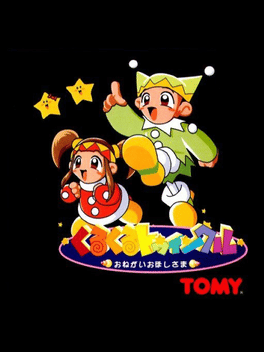
Color-matching puzzle game by Tomcat System released on the PlayStation in 1996. Features a large cast of characters themed after zodiac signs. Swap blocks horizontally and vertically with the cursor to create combos and send garbage blocks to the opponent's side of the field.