New Games - Page 13064

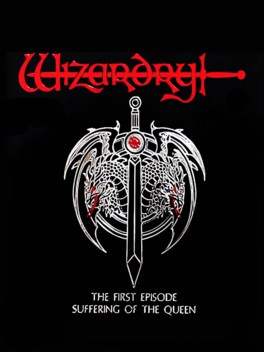
Wizardry Gaiden I: Suffering of the Queen
1991
Wizardry Gaiden I: Suffering of the Queen published in 1991 by ASCII, was the first of the trilogy of Wizardry roleplaying games released for the original gray-scale Nintendo Gameboy portable video game system.Roger Clemens' MVP Baseball
1991
star 4.3Join one of the most dominant pitchers in baseball history for Roger Clemens' MVP Baseball. While the game does not come with the license of Major League Baseball or the MLBPA, there are still 26 similar teams with rosters resembling those of their actual MLB counterparts, including 1991 statistics. Though player names could not be used, the fictional ones make it apparent who each player represents. For instance, you can strike out one of Oakland's Bash brothers (M. Bash or J. Bash) with Texas' R. Nolan or hit a home run with Detroit's C. Fieldman off of Chicago's M. Gaddox. The gameplay of Roger Clemens differs from that of most NES baseball games. Though the batting scenes may resemble those typified by R.B.I. Baseball and Major League Baseball, the view switches to what one might see from the outfield stands once the ball is hit. This results in different controls from most baseball games as well. A player can challenge a friend or the computer, and one-player games may be exhibition or part of a 33-game seasWurm: Journey to the Center of the Earth!
1991
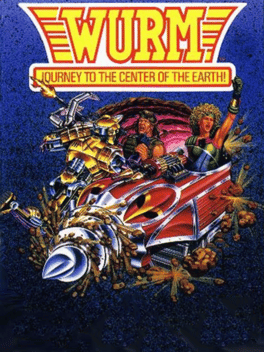
Wurm: Journey to the Center of the Earth is a game featuring multiple sequences. The player controls the VZR vehicle, and occasionally Captain Moby when she ventures out on foot in vertically and horizontally scrolling sequences as well as a first person battle against enemy monsters. Players progress through 5 levels, in which the VZR-5 investigates the fate of the other VZRs. After the completion of each level, the player gains a crystal, which will unlock additional weapons for the VZR, mentioned below.Trouble Shooter
1991
Trouble Shooter
1991
star 7.9After a prince is taken hostage by Blackball, a mutant weapons genius, Madison (the blonde on the right) and Crystal (the brunette on the left) fight through Blackball's domain on hoverpacks to rescue him. Madison will always shoot to the right. Crystal has more firepower, and she can shoot either left or right, left in order to take care of enemies approaching from behind, or right in order to deal more damage. At the beginning of each stage, you can also choose between four different special weapons. Lightning Storm shoots electricity at random, Tidal Wave is a line of vertical energy that you can control, Blizzard sends circles of energy spiraling outward from you, and Avalanche is a wall of missiles. When King Frederick's only son and heir to the throne is kidnapped by Blackball, the mutant military weapons genius, an international disaster seems imminent. Colonel Patch quickly contacts the "Trouble Shooter" team to find Prince Eldon and destroy Blackball and his treacherous robotic underworld. Madison and herTumblePop
1991
TumblePop
1991
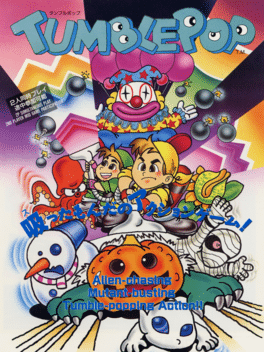
star 7.6Tumblepop is a 1991 platform arcade video game developed by Data East first published in Japan by Namco, then in North America by Leprechaun Inc. and later in Europe by Mitchell Corporation. Starring two ghosthunters, players are tasked with travelling across different countries, capturing enemies and throwing them as bouncing ball, jumping on and off platforms to navigate level obstacles while dodging and defeating monsters in order to save the world.Ninja Gaiden
1991
Ninja Gaiden
1991
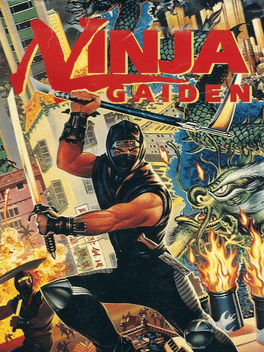
star 6.4Ninja Gaiden is an action video game released for the Game Gear in 1991 by Sega with license from Tecmo. It stars Ryu Hayabusa and is part of the Ninja Gaiden series, although it features a plot not connected to any of the other Ninja Gaiden games. Gameplay is in many ways similar to the NES and Master System games with minor differences in mechanics. Jumping is more like moon jumping and the sword slash is quicker and has a wider range. Ryu can also scale walls and edges. There four different secondary weapons. Ryu's "spiritual strength" (called Force) can go up to 99.Ax Battler: A Legend of Golden Axe
1991
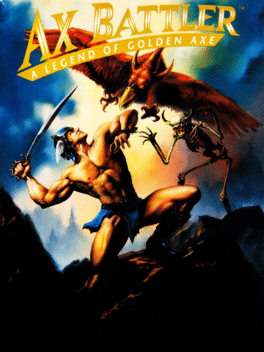
star 5.2Use your wits and your razor sharp sword to recapture the Golden Axe from the diabolical Death Adder. Defeat skeletons and giant bats in dark, deep chasms and caves. And summon Earth, Thunder and Fire Magic to fight gargoyles that come to life before your eyes!World Circuit: The Grand Prix Race Simulation
1991
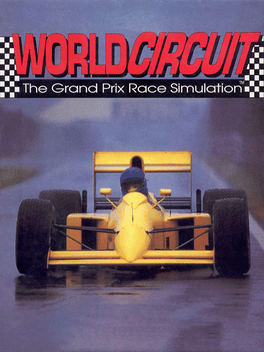
star 7.9Formula 1 Grand Prix (known as World Circuit in the US) is the first installment of Geoff Crammond's Grand Prix series. The game includes all 16 international GP circuits of 1991. Players may drive them in quick race mode, single race or a full championship. The 18 teams and 35 drivers and their performance are based on the 1991 season, but the game doesn't include real names. It is possible to edit and save team and driver names by hand. The extensive tuning feature influences the performance of the car. In-race setup allows players to adjust gear ratios, brake balance, wing downforce and tires during each visit to the pit box. Six optional driving aids help F1 rookies finish their race: players can toggle best line and suggested gear displays to learn track tactics, or have auto brakes, auto gears, self-righting spins and indestructibility to improve their driving. A replay system allows players to watch race scenes from three different views, including track-side camera footage. The game features 3D graphics aPaperboy 2
1991
Paperboy 2
1991
ZX Spectrum Super Nintendo Entertainment System Sega Mega Drive/Genesis DOS Amiga Amstrad CPC Nintendo Entertainment Systemstar 5.3You're a paper boy (or papergirl). Get on your bicycle. Avoid obstacles on the road, such as dogs, cars, and basically everything you can imagine. Hell, some people shoot cannon balls at you! And you'd better be very sure to only throw papers at the right houses!Eliminator Boat Duel
1991
Eliminator Boat Duel
1991
star 7.6Drivers earn thousands of dollars by competing in hydroplane races, setting track records, rescuing stranded people, and collecting cash bonuses. With these winnings they can repair or upgrade various components of the hydroplane to improve racing performance and remain competitive in the increasingly-difficult races. Eliminator Boat Duel offers three difficulty levels: Easy, Normal, and Expert. Completing a race at a lower difficulty level advances the player to the next higher one. At each difficulty level, the player's hydroplane can be damaged from impact with animals, the opponent's hydroplane, and various stationary objects. A false start is penalized with a $2,000 fine. For most of a race, players control their hydroplanes from a bird's-eye view, and the screen scrolls in multiple directions; but in one segment of the race, the graphical perspective changes to a third-person tracking mode. In a single-player game, the player competes first with Seasick Sidney (in Easy mode), with Aquarius Rex (in Normal modeCatacomb 3-D
1991
Catacomb 3-D
1991
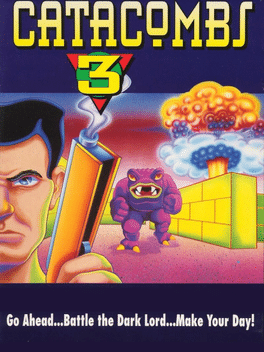
Catacomb 3-D is the third in the Catacomb series of video games, and the first of these games to feature 3D computer graphics. The game was originally published by Softdisk under the Gamer's Edge label, and is a first-person shooter with a dark fantasy setting. The player takes control of the high wizard Petton Everhail, descending into the catacomb of the Towne Cemetery to defeat the evil lich Nemesis and rescue his friend Grelminar. Catacomb 3-D is a landmark title in terms of first-person graphics. The game was released in November 1991 and is arguably the first example of the modern, character-based first-person shooter genre, or at least it was a direct ancestor to the games that popularized the genre. It was released for DOS with EGA graphics. The game introduced the concept of showing the player's hand in the three-dimensional viewpoint, and an enhanced version of its technology was later used for the more successful and well-known Wolfenstein 3D.Snow Brothers
1991
Snow Brothers
1991
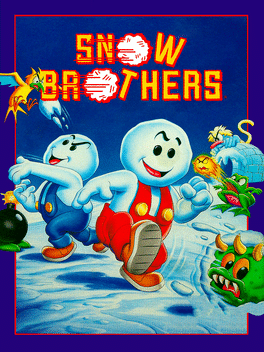
star 7.6Snow Bros. is a fixed-screen platform game where players must defeat all enemies on each level (screen), 50 altogether. The Snow Bros use snow as their weapon, throwing it at the enemies to stun them. When lots of snow is thrown at an enemy, it becomes covered in a flurry and unable to move. These can be rolled into giant snowballs and pushed or kicked into other enemies. If left alone, enemies will eventually defrost and become angry at the player. The enemy-filled snowballs are a much stronger weapon than the regular handful of snow and are the only effective weapon Nick and Tom have against the bosses.Out of This World
1991
Out of This World
1991
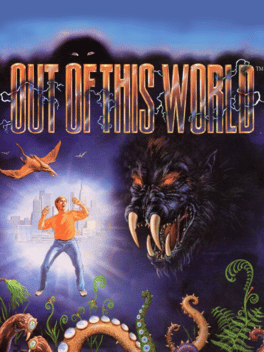
star 8.4Out of This World (Another World in Europe) is a cinematic platformer that uses vector-based graphics and rotoscoped animations to deliver a minimalistic yet expressive visual style. It features a combination of action, platforming, and puzzle-solving mechanics, with a deliberate lack of HUD and textual guidance. Gameplay emphasizes trial-and-error, timing, and exploration, with a limited checkpoint system. In 2005, a homebrew port of the Atari ST version was released for the Game Boy Advance, officially allowed by Éric Chahi to be published with the original assets.Bart Simpson's Escape from Camp Deadly
1991
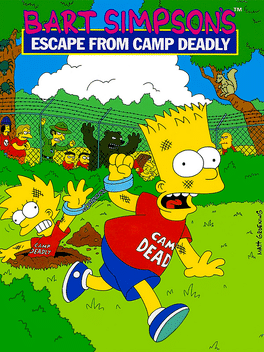
star 5.9School's out and Bart's ready for some summer fun in the sun! Until he got the news - Homer and Marge were sending him and Lisa off to summer camp. Not just any camp, but the infamous Camp Deadly! How bad could it be? Well, with Ironfist Burns as head counselor and Nelson and his band of bullies as bunkmates, it's not exactly paradise. Bart and Lisa are determined to get out - but first they've got to survive outrageous food fights, killer bees and a life-threatening game of capture the flag. Help Bart and Lisa escape, at least in time for school!T2: The Arcade Game
1991
T2: The Arcade Game
1991
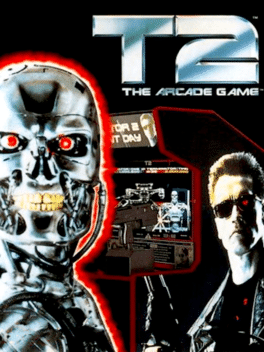
star 8.5As the title states, this is the home conversion of the arcade rail-shooter based on the film Terminator 2: Judgement Day. Up to two players shoot through future and present levels as robotic killers reprogrammed to serve the human resistance. Both players wield a machine gun with infinite ammo that lowers its firing rate (overheats) as it is continuously fired. A secondary weapon (missile launchers in the future, shotguns in the present) has limited ammo but deals heavy damage. Powerups inside the game world include secondary weapon ammo and coolant for the machine guns, and are shot to be collected. T2: The Arcade Game features seven levels based on specific scenes or general concepts in the film. The first four levels act as a prelude, as the player guns down waves of metal Terminators across a post-apocalyptic Battlefield, a besieged Human Hideout, and through the security checkpoints of the enemy supercomputer SkyNet. After destroying the computer, players travel back in time to protect John and Sarah ConnorSuper Castlevania IV
1991
Super Castlevania IV
1991
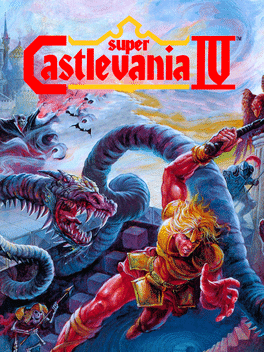
star 8.8A century of Transylvanian tranquility is about to come to a shocking end. Once again the mortifying screams of helpless villagers shake the ground as they huddle against new nightmarish horrors unleashed by the Duke of Darkness, Count Dracula. And this time he has a tombstone with your name on it, Simon Belmont. You must descend into Castle of the Undead and its gruesome ground, accompanied by the most chilling sound effects to ever tingle your spine. Inside, a freshly dug 11 levels maze features the treacherous Terrace of Terror, the dangerous Rotating Dungeon, the Sunken Ruins of Lost Spirits, torture chambers and creature filled caves. Use your whip like a grappling hook and swing past hundreds of traps and a host of ghost freaks, living corpses and hidden goblins. All while dodging or destroying the unpredictable spitting lizards, carnivorous coffins, and more. Find the concealed weapons needed to defeat everything from eerie phantoms to haunted furniture. Then prepare to find yourself face-to-thing with hideoYubiwa Monogatari: Dai-ikkan - Tabi no Nakama
1991
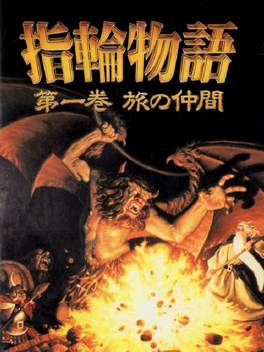
The PC-98 port features different graphics and sound.Final Fantasy IV Easy Type
1991
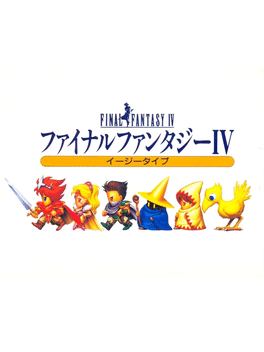
The original Final Fantasy IV was altered in several regards to reduce the difficulty level for Final Fantasy IV Easy Type, a version exclusive to Japan. Various spells, abilities and items were removed or altered, shop prices were lowered, and other tweaks to make the game easy were put in place. Many enemies, attacks and items were renamed. It is often thought the original North American translation was a translation of Easy Type, but the translated version was developed before Easy Type, and the difficulty is reduced further in Easy Type than in the North American version. This led to speculation that Easy Type was based on the North American Final Fantasy II rather than vice versa. Another aspect Easy Type changed is some of the text, which was simplified to make it easier for younger Japanese players to read and to help bring the point of certain comments across more clearly. For example, when Palom clears the fire on Mt. Ordeals with his Blizzard spell and brags about it, Porom reminds him that the Elder ofMahjong Vanilla Syndrome
1991
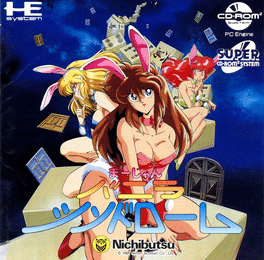
In Mahjong Vanilla Syndrome, the player takes the role of a young man who finds a mysteriously-looking little house, opens the door - and falls through a portal into another dimension! There, he is greeted by a cute bunny-eared girl named Vanilla (perhaps it should have been Bunnyla, but we'll never know), who says she is the guardian of the portal, and if he wants to return home, he'll have to defeat her and the other guardians in the game of mahjong!Daisenryaku G
1991
Daisenryaku G
1991
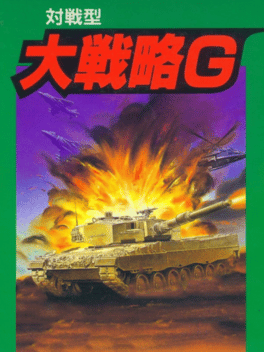
Daisenryaku G is a Strategy game, developed and published by SystemSoft, which was released in Japan in 1991.