New Games - Page 13097

Balldozer
1991
Dyna Blaster
1991
Dyna Blaster
1991
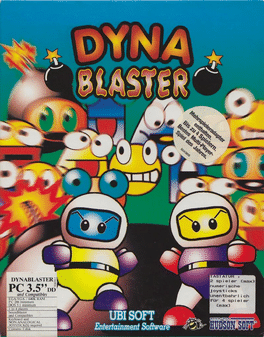
star 8Dyna Blaster or Dynablaster is a name that has been given to the European releases of the game of the Bomberman. It's a strategic, maze-based video game franchise originally developed by Hudson Soft. Most games in the Bomberman franchise largely revolve around two modes of play; single player campaigns where the player must defeat enemies and reach an exit to progress through levels, and multiplayer modes where players must attempt to eliminate each other and be the last one standing. Gameplay involves strategically placing down bombs, which explode in multiple directions after a certain amount of time, in order to destroy obstacles and kill enemies and other players. The player can pick up various power-ups, giving them benefits such as larger explosions or the ability to place more bombs down at a time. The player is killed if they touch an enemy or get caught up in a bomb's explosion, including their own, requiring players to be cautious of their own bomb placement.Merchant Colony
1991
The Dizzy Collection
1991
The Dizzy Collection
1991
The Dizzy Collection: --------------------------------- Dizzy Treasure Island Dizzy Fast Food Fantasy World Dizzy Magicland DizzyWorld League Soccer
1991
World League Soccer
1991
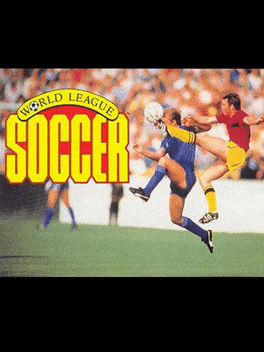
Viewed top-down, the controls involve trapping the ball under your foot, giving you time to prepare passes. Running with the ball is tricky at first, as it doesn't stick to your foot the way it did in contemporary football games. Complex moves such as overhead kicks, back-heels and long-range through-ball passes can be completed with practice.Cadaver: The Payoff
1991
Cadaver: The Payoff
1991
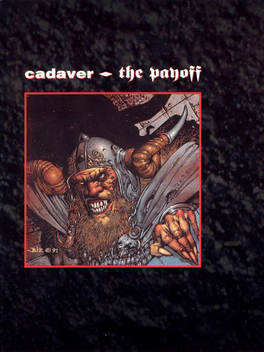
Cadaver: The Payoff is an add-on that requires the original disc to play. It continues the story and offers four more isometric levels of fiendish puzzles. After defeating Dianos, Karadoc returns to the inn only to find his employers gone, and every living person within the city either dead or transformed into a monster. Seeking the cause behind this, the dwarf fights his way to the local temple, and finds the answers - and his money - deep down in the crypts. Gameplay is similar. Cadaver: The Payoff has only four levels, but they are significantly larger than those of the first game, and the second level has a large number of monsters and scant possibilities to heal.Dungeon Hunter
1991
Gemfire
1991
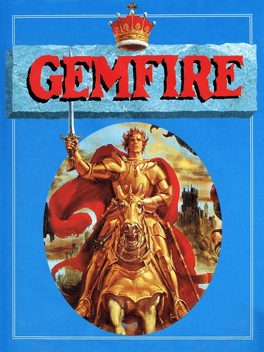
Gemfire
1991
PC-9800 Series Sharp X68000 PC-8800 Series Super Nintendo Entertainment System Sega Mega Drive/Genesis DOS FM Towns Family Computer Nintendo Entertainment System MSX Super FamicomGemfire is a marvelous war strategy from KOEI game collection. The game offers the advanced military strategy and even multiplayer support, but only at the shared screen. The story of the game starts as follows: Once upon a time, Ishmeria was a haven for elves, fairies and other creatures of lore. Yet one day an evil wizard wielded the powers of a Fire Dragon to destroy the peace. A legendary Pastha and 6 magicians fought the wizard and trapped the Dragon. But, the wizard cast a fateful curse, turning the magicians and Dragon into cold gems, which were placed upon the crown: The Gemfire. Gemfire's powers preserved peace in Ishmeria, until King Eselred abused the magic for his greed. Then one day, the Pastha came to Princess Robyn to plea for her help. That very night she stole the crown and hurled the gems into the midnight sky! But before she could destroy the Dragon's ruby, King Eselred caught Robyn and seized the crown! In search of virtuous leaders, the magicians flew to the far corners of Ishmeria. Still,toMiG-29 Fulcrum
1991
MiG-29 Fulcrum
1991
star 6The MiG-29 plane, nicknamed Fulcrum by the West, features in this flight simulation, professionally modeled by former British Aerospace flight simulator designers. You are armed with cannons, rockets, and Air-to-Air and Air-to-Ground missiles. Aerodynamics, blackouts, and physics are all recreated. There are six missions to take on, starting with your basic training.TV Sports Hockey
1991
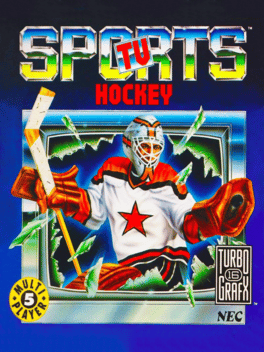
TV Sports Hockey
1991
The stadium organ is pumping as you faceoff against international competition. Play any position, even goalie, with total control. Experience all the stick handling, slap shots, body checks and fisticuffs of world class hockey. Make strategic goalie and line changes. If their goon slams you into the boards, drop your gloves and duke it out. Now you're flying down the ice on a power play. You wind up and crank a high, blazing slap shot, but their goalie's reaching up and...Welcome to World War III, hockey style!Adventure Island II
1991
Adventure Island II
1991
star 6.9Adventure Island II is a side-scrolling platform game developed by Now Production and published by Hudson Soft that was released for the Nintendo Entertainment System in 1991. It is the sequel to Adventure Island and the second game in the series for the NES. While the first game was an adaptation of Westone's Wonder Boy arcade game, Adventure Island II is an entirely original work, as were all the subsequent Adventure Island games.Street Fighter II
1991
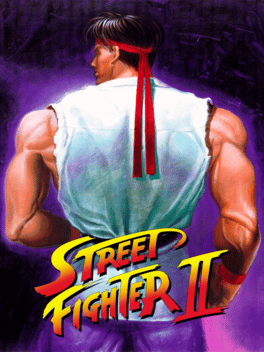
Street Fighter II
1991
star 8.2A sequel to Street Fighter, Street Fighter II improved upon the many concepts introduced in the first game, including the use of command-based special moves and a six-button configuration, while offering players a selection of multiple playable characters, each with their own unique fighting style and special moves. Street Fighter II is credited for starting the fighting game boom during the 1990s. Its success led to the production of several updated versions, each offering additional features and characters over previous versions, as well as many home versions. Some of the home versions of the Street Fighter II games have sold millions of copies, with the SNES port of the first Street Fighter II being Capcom's best-selling consumer game of all-time as of 2008. Street Fighter II follows several of the conventions and rules already established by its original 1987 predecessor. The player engages opponents in one-on-one close quarter combat in a series of best-two-out-of-three matches. The objective of each round iShadow Knights
1991
Shadow Knights
1991
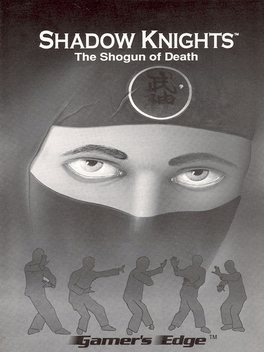
As a ninja with a mission to "redeem Naipusan, the once peaceful land that was destroyed by the northern armies", you have to defeat the evil Shogun of Death. Shadow Knights is a platform game where you try to complete several levels, such as a village, a cemetery or a castle, before confronting the final boss. On each level, you'll encounter a lot of enemies - initially dogs and ninjas with clubs and bows, but more types of enemies appear later. To defeat them, you can slash at them with your sword. However, your ninja also has magic powers. He can spend this magical energy to toss magical projectiles at the enemies, or to restore his health. Depleted magical energy can be refilled by collecting golden spheres scattered throughout the levels.Dead Heat Scramble
1991
Dead Heat Scramble
1991
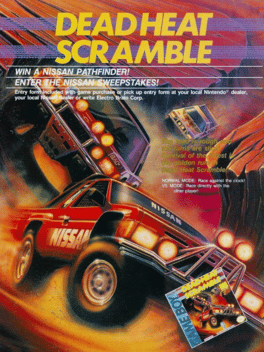
star 5.5Players must choose between a dune buggy, a sand rail vehicle, and the incredible off-road truck. All races are strictly against the clock while the driver navigates through blockades on the road and other drivers that want to defeat the player. All of the ten courses must be unlocked in a linear fashion; all the races take place in a tube. Few power-ups exist in them game; including a chance to increase the player's nitro boost. There are ten stages in the entire game. No penalties are given for bumping into the other drivers; unlike real life. Each course is in the shape of a half-pipe.Legend of Success Joe
1991
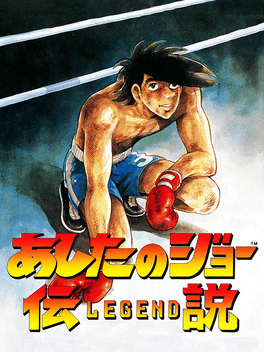
Legend of Success Joe puts players in the role of Joe, a young boxer aspiring to make it up the ranks of the boxing world. But all is not well in Joe's world, and between boxing matches he may have to contend with street thugs out for his blood. The game is viewed from a side 2D view, and Joe can move up and down within the backgrounds as well as forwards and backwards. Fighting consists of using the four basic boxing punches, the straight, the hook, the body blow, and the uppercut, to take opponents down. During boxing matches each boxer has three health bars on screen, with the second smaller than the first and the third smaller than the second. When a boxer's health bar is drained he gets knocked down, but can get back up. When the third health bar is drained that boxer is knocked out and loses the match.Pac-Man
1991
Solidarność
1991
Solidarność
1991
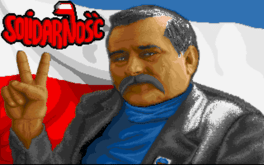
Solidarność is a 1991 Polish strategy computer game developed by P.Z.Karen Co. under the direction of Przemysław Rokita and published by California Dreams. It was created by Polish programmers specifically for an American audience in order to support a Hollywood film about the life of Lech Wałęsa, which was never actualised. Set in Poland in the 1980s, the player takes the role of the leader of an illegal union, and aims to gain more support in 7 regions than the Communists. The player achieves this through speeches, printing leaflets, organizing demonstrations and strikes.Wings of Wor
1991
Wings of Wor
1991
star 6.5Gynoug, known in North America as Wings of Wor, is a 1991 scrolling shooter video game developed by Masaya and published by NCS Corporation for the Sega Genesis. The game was released in North America and Europe in 1991 and in Japan on January 25, 1991, and re-released on the Wii Virtual Console exclusively in Japan on May 20, 2008.Gulclight TDF2
1991
Spud's Adventure
1991
Spud's Adventure
1991
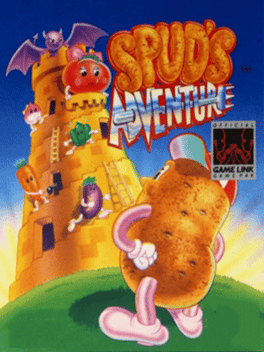
Spud's Adventure is an Action game, developed and published by Atlus, which was released in 1991.