New Games - Page 13211

Blockout
1989
Blockout
1989
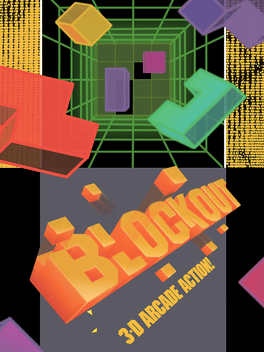
Arcade Apple IIGS Web browser PC-8800 Series Commodore C64/128/MAX Atari Lynx Sega Mega Drive/Genesis Atari ST/STE Mac DOS Amiga Nintendo Entertainment Systemstar 7.7Blockout is a puzzle videogame, created in 1989 by Polish developer - California Dreams, designed by Aleksander Ustaszewski and Mirosław Zabłocki. The game is the logical extension of Tetris into the third dimension. In Tetris, the player manipulates a set of tetrominoes which fall into a two-dimensional pit (seen from the side). The aim is to solve a real-time packing problem by forming complete rows, which then disappear and score points. Poor play leads to incomplete rows, caused by inefficient arrangements of tiles; these rows do not disappear, giving the player progressively less space and less time to play subsequent pieces. Similarly, in Blockout, the player manipulates a set of polycubes which fall into a three-dimensional pit (seen from above; the pieces appear in the foreground and fall away). The pieces can be rotated around all three axes, and moved horizontally and vertically. The aim is to form complete layers.Gates of Zendocon
1989
Gates of Zendocon
1989
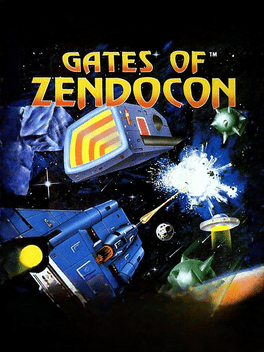
Gates of Zendocon is a side-scrolling shooter very similar to the original arcade shooter of this type, Scramble. Unlike Scramble, however, there are 51 game areas in total, but the player fights through a subset of them through branches, choosing the next area to visit. Some aliens will join you when shot (power-ups). Alien bases in each area allow you to repair your weapons and shield, but landing at the wrong time will cause your ship to explode and lose all power-ups.Shadow of the Beast
1989
Shadow of the Beast
1989
Commodore VIC-20 Commodore C64/128/MAX ZX Spectrum Atari Lynx Super Nintendo Entertainment System Sega Mega Drive/Genesis Atari ST/STE FM Towns Amiga Turbografx-16/PC Engine CD Amstrad CPC Sega Master System/Mark IIIstar 6.6Shadow of the Beast is a platform game developed by Reflections and published by Psygnosis in 1989. The original version was released for the Amiga and later ported to many other systems. The game was known for its graphics, with many colours on screen and up to twelve levels of parallax scrolling backdrops, and its atmospheric score composed by David Whittaker, which used high-quality instrument samples.Fester's Quest
1989
Fester's Quest
1989
star 5.6It's just a kidnapping. Of an entire day. By an alien UFO! Will Fester sit still for this? The quest begins. For starters, take on slime replicators, skeeters, globules and giant scorpions. Your health is at stake, not to mention your life! Will you whip the Alien Bosses or will they whip you? Lucky for you, this is a family affair. And what a family! Find your way to Thing and help is right at hand. In trouble? Just ring for Lurch. He'll give those aliens trouble with a capital "L". The fate of the whole city is in your hands, and we've saved the worst for last!Hero's Quest: So You Want to Be a Hero
1989
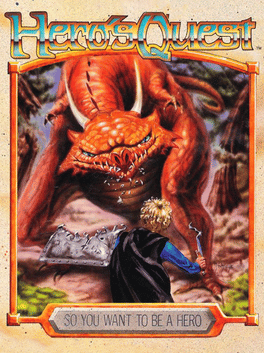
star 8The little town of Spielburg is populated mostly by beer-drinking humans and some centaurs who like working in the field. Spielburg is surrounded by forests and mountains, where all kinds of weird creatures dwell: ogres, goblins, talking foxes, stupid magicians, and others. Lately, Spielburg has been assaulted by brigands; besides, the witch Baba Yaga is not to be trusted. The town has everything it needs--even a Thieves Guild--except a strong, brave hero who would protect it. So when a wandering adventurer enters the town, he quickly realizes that his skills might be of use. Hero's Quest: So You Want to Be a Hero is a hybrid game that contains Role-Playing and Adventure elements. It is visually very similar to other Quest titles by Sierra (such as for example Space Quest), but the gameplay--besides the usual exploration, conversations with characters, and the solving an occasional puzzle with the help of inventory items--also involves combat and character development. In the beginning of the game, the player chooTheir Finest Hour: The Battle of Britain
1989
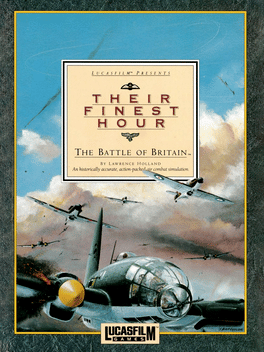
Their Finest Hour: The Battle of Britain is a World War II combat flight simulation game by Lawrence Holland, released in October 1989 for the Amiga, Atari ST and MS-DOS systems. It was the second game in the trilogy of World War II titles by Lucasfilm Games, the others being Battlehawks 1942 (1988) and Secret Weapons of the Luftwaffe (1991). The game was released with a 192-page manual written by Victor Cross, that provided a detailed historical overview of the battle and pilots' perspectives. An expansion pack, Their Finest Missions: Volume One, was released in 1989.Chess Player 2150
1989
Chess Player 2150
1989
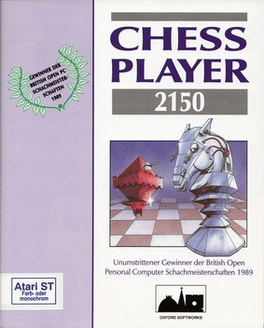
Chess Player 2150 is a chess program which played well against the other chess programs of the day and won the 1989 British Open Personal Computer Chess Championship (according to a post in ST Report International Online Magazine, November 13, 1992, No.8.45). The author was not shy about his program's prowess. Built into the program is a pull-down menu, giving it's performance against Chessmaster 2000, Chessmaster 2100 and Colossus X, in 10 games apiece. The game was designed to improve as it played, so over time a game that played against good players would be much better than when it first began. Users have the option of saving, so that the gained intelligence isn't lost.Arctic Adventure: Penguin & Seal
1989
Go North to the Arctic and meet Mr. Penguin. He is one of the great pioneers of the icy climate and if I may say so, a survivor. His game is collecting diamonds scattered in the coldest corners of the globe. Guide Mr. Penguin through each round and help him with his diamond collection. You must collect all the diamonds and stash them safely in your igloo. Watch out! Those nasty seals have tusks as sharp as blades. If you can't crush them with a block of ice I suggest you dive out of their way. Hang on! This is only round No. 1. Now let's try getting through to round No. 50. If you manage to get through all of that, how about constructing your own personal custom-tailored round. Good luck!Uninvited
1989
Thunderbirds
1989
Maharaja
1989
Maharaja
1989
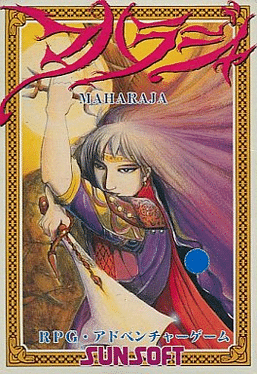
Famicom RPG released by Sunsoft in 1989. Set in ancient India, characters and events from Hindu mythology provide most of the game's backdrop.Artist Tool
1989
Artist Tool
1989
An art program for the PC Engine. Compatible with three peripherals: a drawing tablet, a scanner and a printer.Meiji Ishin
1989
Meiji Ishin
1989
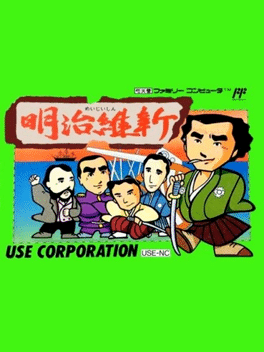
A Famicom adventure game set during the Meiji Restoration era. It features strategy and action elements as well. Meiji Ishin ("Meiji Restoration") is an adventure game for the Nintendo Famicom that allows the player to take an active role in one of the most important historical movements in Japanese history: the Meiji Restoration era of the late 19th century, which wrested control of the country from the Shogunate and back to the Emperor. The first half of the game is spent gathering allies which involves moving from region to region, conversing with leaders and samurai, and occasionally fighting enemies in duels. The second half gives way to a tactical strategy sim similar to Nobunaga's Ambition, as the player's recruited forces march on Edo (Tokyo) to take on the Shogun.TwinBee 3: Poko-poko Daimaou
1989
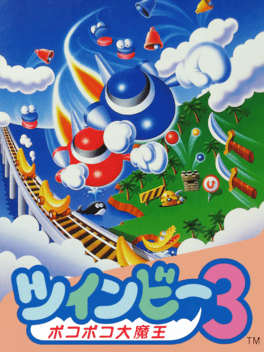
TwinBee 3: Poko Poko Daimaō is a vertical-scrolling shoot 'em up video game produced by Konami released for the Famicom. It is the third and last game in the TwinBee series for the Famicom and it ditches Stinger's horizontal levels making it more in line with the first title. The game is considerably easier than its predecessors due to an option mode that allows players to adjust the difficulty and number of ships, as well as the inclusion of the new "soul reviving system", which allows players to recover their power-ups after losing a ship. The game uses digitized PCM voice samples, particularly when the conga music in one stage chants "Poko Poko", and in the beginning of each stage, in which a voice proclaims the name of the stage. It was re-released on April 14, 2006 as part of the i-Revo downloadable game service.Captain Ed
1989
Captain Ed
1989
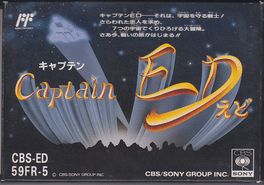
Captain Ed is an Action game, developed by Graphic Research and published by CBS Sony Group, which was released in Japan in 1989.F1 Dream
1989
F1 Dream
1989
F-1 Dream is an automobile racing game for the PC Engine released exclusively in Japan in 1988. The graphics are identical to the arcade game, even down to the pit crew and lane and fans in the stands. The controls are the same as well: The d-pad controls all eight ways, and the two buttons work as both gas-and-brake and as the transmission. Press the II button to launch the car, and once first gear tops out, quick switch to the I button. If your car is Turbo-equipped, once second gear tops out, hold down both buttons to kick in the afterburner. Letting go of the top gear button will brake the car, and hitting the button again will resume acceleration. The game includes back-markers as well. If you're leading the race or you and an opponent are well ahead of the pack, slower white cars will appear on the track to make things interesting for you, usually just as you're coming up to a particularly tough corner, or drifting across your lane on a straight and forcing you to make a course correction. They're a minor anAmerican Dream
1989
American Dream
1989
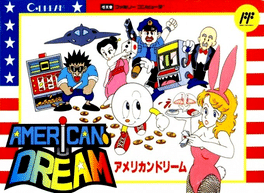
The player must earn money in order to become the wealthiest gambler in the world. The game, set in New York City, is considered a spin-off from the Pachio-kun franchise. Al Capone has a cameo role in this game even though he lived about one thousand miles to the west (Chicago) in real life. Roads, taxis and automobiles are not portrayed in the game. However, a black limousine that escorts the player from the air force base to the final casino is portrayed as driving on grass. This is in direct opposition to the real New York City where the majority of the surface is concrete (either as roads, parking lots, or as foundations for the buildings). Only parks and some older residential districts use grass in their design in the real world. Buildings are either shown as dilapidated tenements, shiny towers, or as flashy casinos.Juuouki
1989
Juuouki
1989
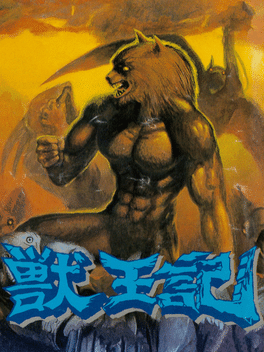
The TurboGrafx-CD (PC Engine CD) version of Altered Beast is a largely faithful port of the arcade original, adding "story mode" cutscenes, Japanese narration, and slightly altered colors.