Most Popular Fighting Games - Page 112

Pray for Death
1996
Pray for Death
1996
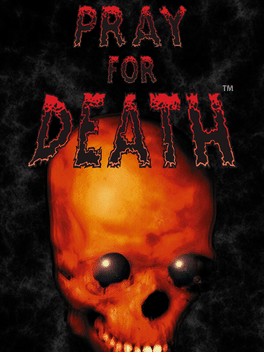
Through time and space he finest warriors in creation have gathered together for the ultimate showdown. At the behest of Death himself, angel will fight demon, wizard will fight warlord, robot will fight human. The creature that triumphs in this awesome battle will be rewarded with that most precious of commodities - life itself.Expect No Mercy
1995
Expect No Mercy
1995
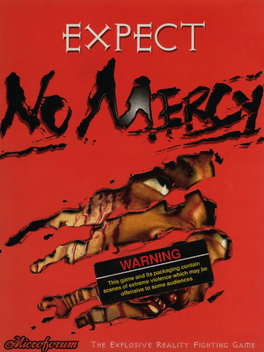
The Virtual Arts Fighting Academy is the latest way of teaching deadly martial arts. Students are put through ruthless training using the most advanced Virtual Reality gear. They train and light in virtual worlds with Virtual Reality opponents yet the pain is real. The academy is also a cover for a deadly group of mercenary assassins willing to kill for a price. You are an undercover agent tor the covert government agency known as the Federal Security Bureau. Your mission is to destroy the Virtual Arts Fighting Academy and bring down its leader. But the mission is not as simple as it seems. Expect the most brutal lights ever seen, virtual masters, intoxicating virtual reality worlds and the most explosive visual effects ever seen in a fighting game. Microforum is proud to present the most realistic, fast action, lighting game ever! Real actors, state-of-the-art animation and graphics. ruthless martial arts fights. intelligent enemies, exciting play levels bizarre cast of virtual opponents, explosive special effecSoulCalibur VI: Collector's Edition
2018
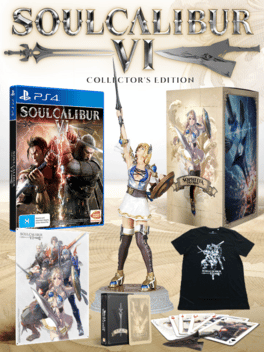
This version contains: - SoulCalibur VI full game. - 120 page art book. - Metal case with built-in soundbox. - Soundtrack on disk. - 12'' Collectable Sophitia figure. - Collector's Edition box.Battle Wrath
1997
Battle Wrath
1997
During the span of history, there have been many great strategists that have lead their troops to victory. The greatest of these are known as Battle Lords and are respected greatly. In a tournament to discover the greatest of these battle lords, great warriors have been pulled out from different eras and available to be controlled by the strategists. The Battle Lords will make their champions fight 1 on 1 amongst themselves to find out who can triumph over all others and obtain the highest ranking. The Battle Lord who can master his will over different warriors will become the Ruler of the Battle Lords.Sango Fighter
1992
Sango Fighter
1992
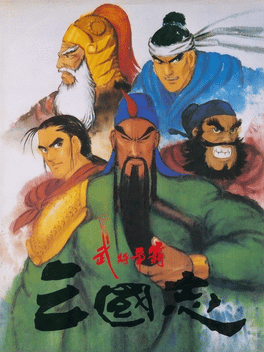
Towards the end of the Han Dynasty, China was controlled by the Emperor Ling, who was in turn controlled by ten of his servants in the royal palace. This created a convenient atmosphere for bandits, and the land was in turmoil. Then the Emperor ordered the ten dukes to take it on themselves to restore peace in the land, but the dukes instead fought amongst themselves. Finally, the duke Cao Cao took the Emperor captive and he now controls the realm. Five fighters set out to take on Cao Cao's forces and restore equilibrium to the land.Street Fighting Man
1989
Street Fighting Man
1989
Are you ready for a challenge that will test your game playing abilities to the max - if so read on! You control Nick "The Hammer" on a rescue mission that will take you onto the streets of five of the most dangerous cities in the USA. The streets are controlled by gangs possesive of their turf and a trespass always starts a rumble. Homeboys, Lipsticks, Sharks and other gangs roam at will through an incredible street and hideout maze of unique 3D graphics. Nick "The Hammer" is a bad dude himself and his punch and kick abilities are the equal of any street warrior. He will also need his full armory of weapons including knives, crowbars, and chains to survive in the urban jungle. Warning! Don't be fooled by any friendly bystander as they could end up becoming just as dangerous as the most vicious gang member. The battles are bloody - the graphics superb - beware, you play at your own risk!Journey to the West
1994
Journey to the West
1994
The Journey to the West tells the story of the fourteen-year pilgrimage of the monk Xuanzang, one of China’s most famous religious heroes, and his three supernatural disciples, in search of Buddhist scriptures. Throughout his journey, Xuanzang fights demons who wish to eat him, communes with spirits, and traverses a land riddled with a multitude of obstacles, both real and fantastical. An adventure rich with danger and excitement.Ultraman
1991
Ultraman
1991
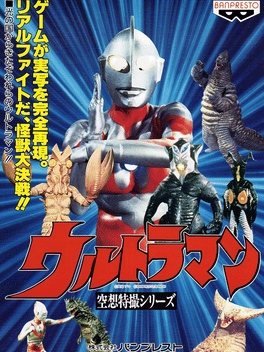
A one-on-one fighting game where Ultraman battles against fierce monsters. Based on the popular television show from 1967, Ultraman directly follows the story of its source material. Cast in the role of the titular Ultraman, the player must defeat many of the same monsters that appeared in the original series. Taking the appearance of a 1-on-1 fighting game, Ultraman can punch, kick, and grapple his opponent, as well as use a variety of various special moves that must be charged. However, in order to actually defeat his opponent, Ultraman must deplete their continually-recharging life bar, and at that moment hit with his most powerful special attack: the Specium Beam. As the game continues, different enemies may even find ways to avoid this most formidable attack, and Ultraman must adapt... Each stage has a time limit of only three minutes, and there are three lives and no continues.Rabbit
1997
Rabbit
1997
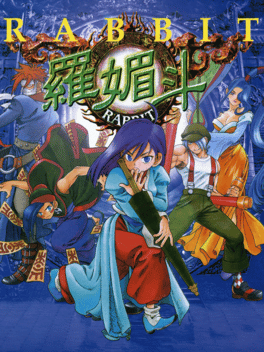
Rabbit is a 2D fighting game, with cartoonish colorful graphics. The game has 8 playable characters - Wu Ling (Rabbit), Tien-Ren (hawk), Eight (ox), Hou-En (wolf), Ja-Koh (snake), Yu-Lan (fox), Rex (tiger) and Eddy (wild boar). The player chooses one from these heroes, and must defeat all opponents, plus the final boss. Each character has a special animal spirit that helps with the battle and they have a spirit' bar to use these specials. The game uses the joystick plus 4 buttons - for light punch, heavy punch, light kick, and heavy kick.Dead or Alive ++
1998
Dead or Alive ++
1998
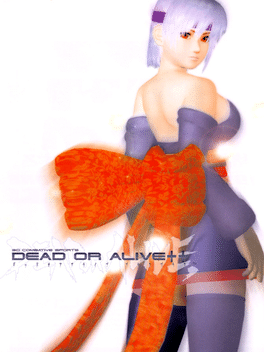
Dead or Alive ++ (Plus Plus) is an updated version of Dead or Alive released in 1998. It includes new characters, improved graphics, and unlockable costumes. The updated version also features remixed stage designs.The Killing Blade
1997
The Killing Blade
1997
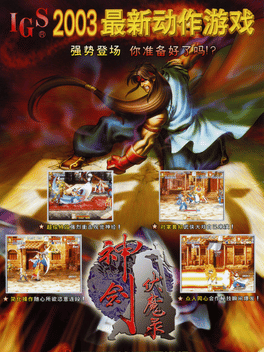
The Killing Blade is a 2D fighting game released in 1998 by International Game SystemDragon Master
1994
Dragon Master
1994
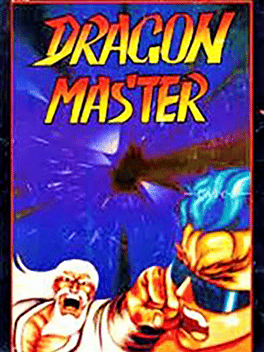
Dragon Master is a 1994 2D fighting arcade game developed and published by Korean company UNiCO Electronics. It was released during the fighting game trend in the early 1990s that started with Capcom's Street Fighter II.D-Xhird
1997
D-Xhird
1997
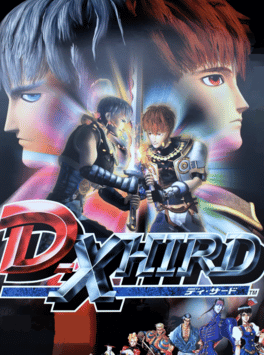
Arena fighting with weapons clashing! This is the ultimate fight! 3D battle with incredible graphics unlike any you've ever seen on Sega Saturn! Take to the ring, punk!Trash It
1997
Trash It
1997
Trash It is an orgy of destruction that will set pulses racing in the most original arcade in recent years. Based on the exploits of Jack Hammer, Trash It offers the player the opportunity to destroy memmoth buildings, monumental structures and pulsating power plants in the ultimate frency of devastation and vandalism. Your palms will sweat, your veins bulge as you go through level after level of challenging gameplay.Black Hole Assault
1992
Black Hole Assault
1992
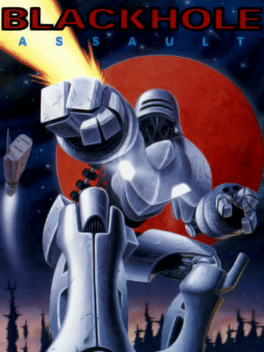
According to Black Hole Assault, the 22nd century sees earth technology advance to the point where exploration of the immediate solar system is not only possible, but necessary due to resource constraints. Humans are attempting to harvest the resources of the entire solar system but have met with trouble from alien invaders. It is up to a small force of humans who recognize and understand the threat to confront the aliens head on. The weapon of choice in this game is the Cybernetic Anthropomorphized Machine, or C.A.M. The C.A.M. is a large robot that fights 1-on-1 against alien robots. All of the gameplay in Black Hole Assault revolves around single-round, 1-on-1 robot fighting action. There are 10 backdrops against which to beat up robots, including various planets and moons around the solar system. The game has 4 different modes. The main story mode is Operation BHA. The exhibition mode allows players to customize matches down to the robots each player will use and the backdrop to play on. The exhibition mode cBurning Fists: Force Striker
2006
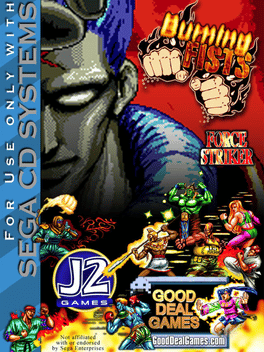
Burning Fist (also known as Force Striker in its early alpha build) is a cancelled fighting game that was in development in 1994 by Sega of Japan for the Mega CD. As we can read at Sega Base, both the Force Striker alpha and the Burning Fists beta were leaked rom a former SoJ employee and sold on eBay some years ago. Burning Fist was never officially released, but in 2006 those alpha / beta builds were re-sold to Good Deal Games.Dead or Alive 2: Limited Edition
2000
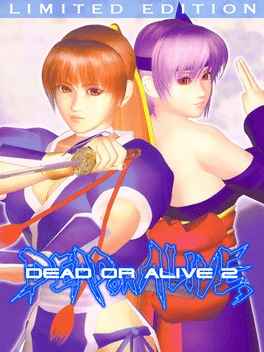
The world has become a very chaotic and disoriented place ever since the tragic murder of Fame Douglas, the sponsor of the legendary "Dead or Alive I World Combat Championship". We must now rely on you to ensure that the world returns back to a state of peace. With 12 characters to choose from, your mission is to win the championship and save the world from the Tengu Disaster that will take place at the century's end. Your ability to battle using various fighting techniques will determine your characters fate. Will you fight for life or fight to the death? This updated Dreamcast version features two new playable characters, two new stages, stage multipart extensions, new costumes, new cut scenes and the "Gallery" option.Saban's VR Troopers
1995
Saban's VR Troopers
1995
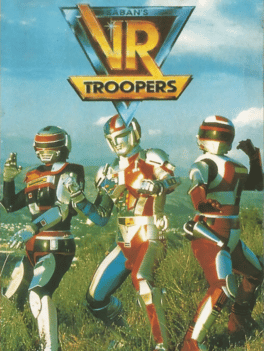
VR Troopers is an Action game, developed by Syrox Developments and published by Sega, which was released in 1995.Buster Fight
1994
Buster Fight
1994
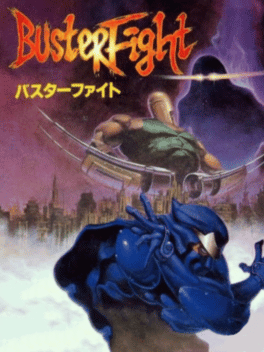
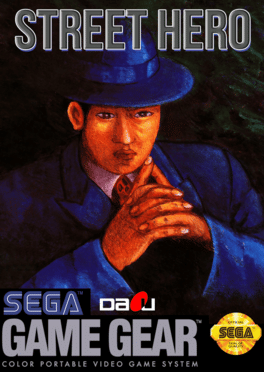
Buster Fight is an Action game, developed by Sims and published by Sega, which was released in Japan in 1994.Street Hero
1993
Street Hero
1993
Street Hero is a Streets of Rage style side scrolling beat-em-up, offering plenty of action for Sega's handheld. Although the Sega Master System version of the game saw release in Korea, it is one considerable rarity that very few have actually seen. This fact is only strengthened by the knowledge that until February 2012, no ROM of the game existed online in any form. A real shame given the high level of quality of gameplay which has come from the usually disappointing array of 8-bit Korean developers.