Most Popular Arcade Games - Page 124

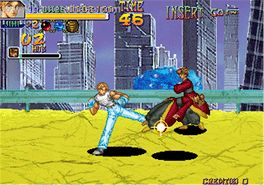
Thunder Heroes
2001
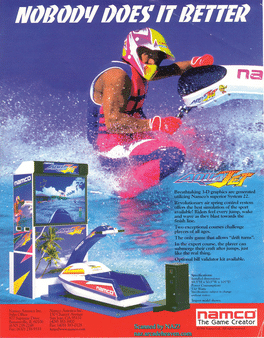
Aqua Jet
1996
Lethal Crash Race
1993
Lethal Crash Race
1993
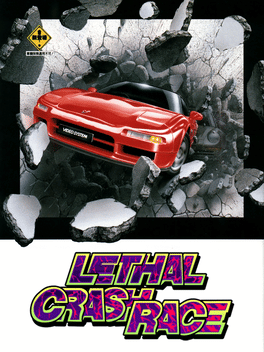
A one or two player racing game published and developed by Video System Co., Ltd. in 1993.Desert War
1995
Desert War
1995
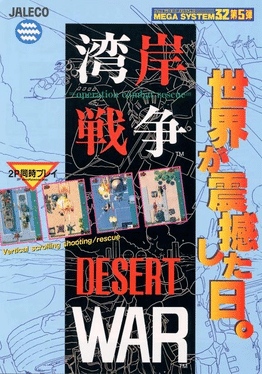
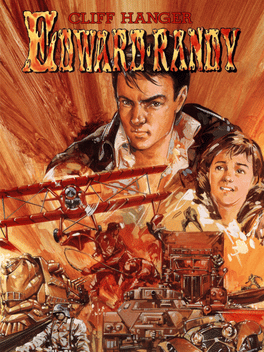
A vertically scrolling shoot'em up game where the mission is to rescue the prisoners of war from enemy battlefields.The Cliffhanger: Edward Randy
1990
A fast moving platform game in which the player controls the Indiana Jones-esque and unfortunately named 'Edward Randy'. The levels are an inventive mix of standard platform action and 3-D scrolling levels; the latter usually having the player driving a jeep and repelling the enemy attacks. The game is based on the archetypal Hollywood action blockbuster and features a filmic score to back up the on-screen action. The player's only weapon is a whip - another nod to the Indiana Jones character - which can be used to both attack enemies and as a 'rope', to enable the player to reach distant platforms.F1 Exhaust Note
1991
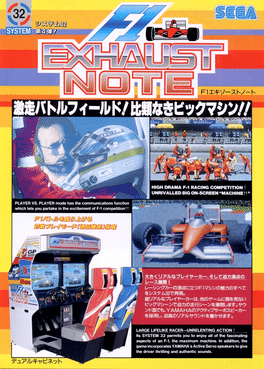
F1 Exhaust Note
1991
F1 Exhaust Note is a two-player arcade game modeled on Formula One racing game, released in 1991.Grand Prix Star
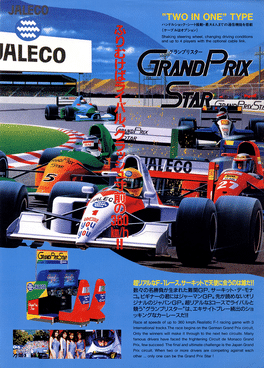
1991
Fighter & Attacker
1992
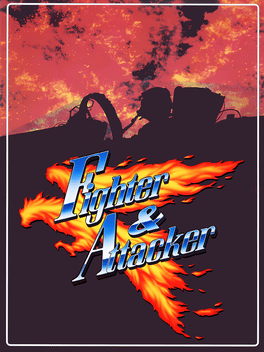
Fighter & Attacker
1992
Fighter & Attacker, originally titled F/A in Japan, is a vertical scrolling shooter arcade game, which was released by Namco in 1992. The game runs on Namco NA-1 hardware, was the first game on this hardware to be released outside Japan (Bakuretsu Quiz Ma-Q Dai Bōken was the first overall) and is the only game from the company that showed the Federal Bureau of Investigation's "Winners Don't Use Drugs" screen in its attract sequence with vertical orientation (the two titles that displayed it previously, Tank Force and Steel Gunner 2, both displayed it with horizontal orientation).Final Lap R
1995
Final Lap R
1995
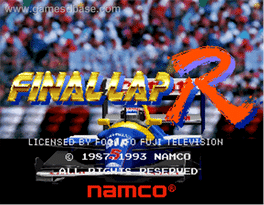
The last game in Namco's seminal F1 series, which began eleven years' earlier with 1982's "Pole Position". Final Lap R features the same loose handling and demanding game-play of its predecessors, but has the obligatory improved graphics, due to the more powerful host hardware. The game offers players a choice of four race tracksGold Medalist
1988
Gold Medalist
1988
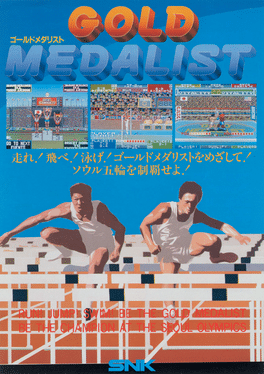
Based on the Seoul Olympics, this is a multi-event track and field game for up to four players and featuring nine different events. Despite being heavily influenced by Konami's own "Track and Field" series, Gold Medalist lacks both the addictiveness and tight gameplay mechanics of the games upon which it is based. The nine disciplines, which can be attempted in any order, are : * 100 Metre Sprint * Long Jump * Horizontal Bars * Freestyle Swimming * Boxing * Discus * 110m Hurdles * High Jump * 400m RelayDokkaebi-ga Ganda
1995
Dokkaebi-ga Ganda
1995
Often also refered to as Cobi Comi, after the two kobold protagonists, the game offers standard platforming fare by Senori Box, who should disappear after a few more announcements of games that got never released, only to re-emerge years later as Jaemi Inneun Nyeoseokdeul (재미있는 녀석들).Funky Ball
1995
Kozure Ookami
1987
Kozure Ookami
1987
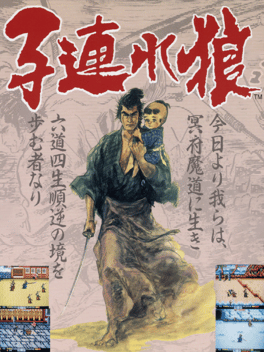
Game based on Lone Wolf and Cub. After Ogami Ittō's wife Azami gives birth to their son, Daigorō, Ogami Ittō returns to find her and all of their household brutally murdered, with only the newborn Daigorō surviving. The supposed culprits are three former retainers of an abolished clan, avenging the execution of their lord by Ogami Ittō. However, the entire matter was planned by Ura-Yagyū (Shadow Yagyu) Yagyū Retsudō, leader of the Ura-Yagyū clan, in order to seize Ogami's post as part of a masterplan to control the three key positions of power: the spy system, the official assassins and the Shogunate Decapitator. During the initial incursion, an ihai (funeral tablet) with the shōgun's crest on it was placed inside the Ogami family shrine, signifying a supposed wish for the shogun's death. When the tablet is "discovered" during the murder investigation, its presence condemns Ittō as a traitor and thus he is forced to forfeit his post.Swat Police
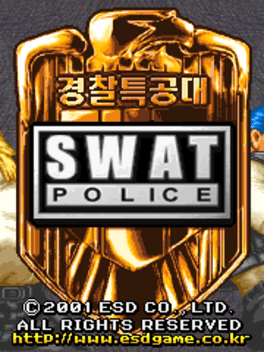
2001
Twin Action
1995
Success Joe
1990
Success Joe
1990
Extremely rare, this game is based on the classic manga/anime series Ashita no Joe (Tomorrow's Joe). The manga ran from 1968 to 1973 in Shonen Magazine. There were also 2 TV series that ran from 1970 to 1971 and 1980 to 1981 and a movie was released in 1980. When one of Joe's old rivals, Rikishi, died in the ring in 1970, Kodansha publishing actually held a funeral service for him. Over 700 people attended from all over Japan. An actual Buddhist priest presided over the funeral, held in a full-sized boxing ring.Sprint One
1978
Sprint One
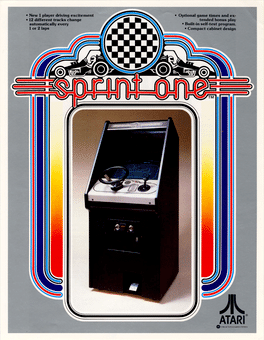
1978
Super One, released in 1978, is a simple b&w overhead-view arcade racing game. It is single player version of Sprint 2 and a sequel to the Championship Sprint and Super Sprint games.Packin Bang Bang
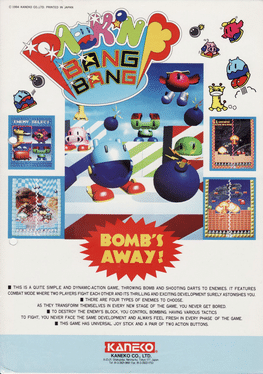
1994
Ninja Kazan
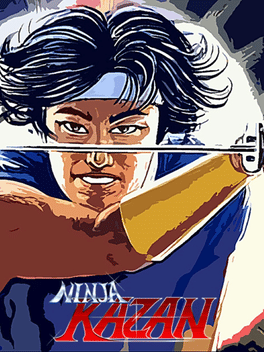
1988