Most Popular Arcade Games - Page 129

Gang Busters
1988
Gang Busters
1988
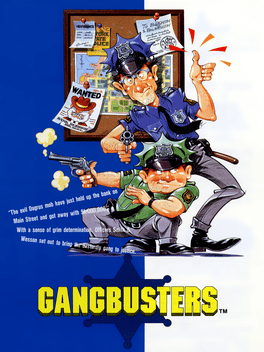
The evil Dagrus mob have just held up the bank on Main Street and got away with $1,000,000! With a sense of grim determination, officers Smith and Wesson set out to bring the dastardly gang to justice. Collect criminals while gunning down hundreds of others in this top-down shooter from Konami.Ghox
1991
Gimme a Break
1985
Gimme a Break
1985
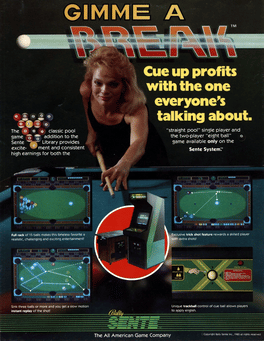
Gimme a Break is a cue sports arcade game which was released by Bally and Sente in 1985; it was the first of the second batch of games to run on that company's SAC-I hardware, and the player must use a singular button to position the cue ball, with a trackball to control it during each shot. In a two-player game, one player must aim for the solid-coloured balls (1 to 7), while the other must aim for the white ones with a coloured stripe across them (9 to 15) - and in a one-player game there will also be bonus rounds where the player must pot bonus balls to earn extra shots. If players should pot three or more balls, with a single shot, they'll get treated to a slow-motion "action replay" of it; it is also worth noting that if a certain dip switch is set to "on", this game will show pictures of children who were missing at the time in its attract mode (and this also applies to that other Bally/Sente game for 1985, Mini Golf).Gridiron Fight
1985
Gridiron Fight
1985
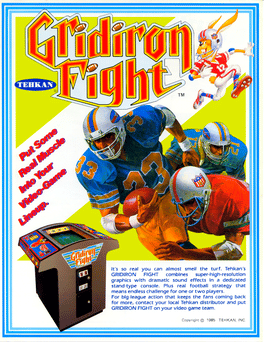
Gridiron Fight is a two-dimensional top-down scrolling American football game in which the player(s) control the virtual player on their team who is closest to the ball, with the trackball determining the speed and direction at which the player runs. A single push-button labelled "Kick" causes the virtual player in possession to release the ball with the same force and direction in which he is currently running. (This button is duplicated on either side of the trackball for left or right-handed players.) The Player 1 (red trackball) side contained two additional push-buttons for choosing between Single or Two-Player games. Before each play, players are invited to select from a variety of formations, e.g. "Sweep" or "Draw". The formation selected is displayed on a seven-segment LED on the player's control panel.Batrider
1998
Batrider
1998
Armed Police Batrider (アームドポリス バトライダー?) is a vertically scrolling manic shooter arcade game developed and published by Raizing/Eighting in 1998. The player controls teams of flying jet bikes (Batriders) each with their own pilot; players can choose up to three of nine standard characters plus another nine unlockable characters from the previous Raizing games Mahou Daisakusen and Battle Garegga. Batrider contains up to seven stages along with a large number of secrets, which are either unlockable with codes or DIP switch settings, or hidden within the game itself.Cybattler
1993
Cybattler
1993
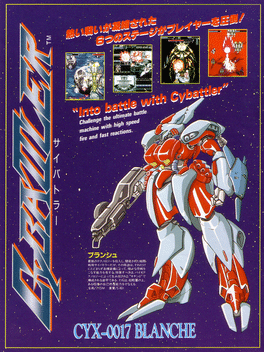
Cybattler is a up-scrolling shoot 'em up game where you take control of the mecha CYX-0017 BLANCHE that can shoot and slash with its plasma sword in all direction in a space themed environment. As you make progress you have to fight of various space crafts in varying sizes, other mechas and bosses. As well as evading destructible rocks. When using your gun a meter at the bottom of the screen depletes. The meter recharges when not used. Weapon and repair power-ups can be collected. The game can be played solo or with a friend.Space Invaders '95: The Attack of Lunar Loonies
1995
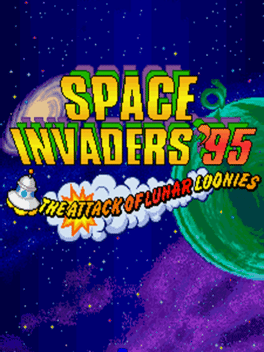
Space Invaders '95: The Attack of the Lunar Loonies is an Action game, developed and published by Taito Corporation, which was released in 1995.Mighty! Pang
2000
Mighty! Pang
2000
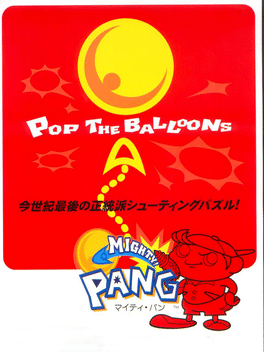
Mighty! Pang is an arcade-style action game where players shoot wires to pop balloons that bounce around the screen. Balloons split into smaller ones when hit, and disappear when reduced to their smallest size. Touching a balloon results in losing a life. The game features three modes: Tour Mode: Clear each stage by eliminating all balloons while traveling through different locations. Panic Mode: Survive as long as possible against an endless wave of balloons. Expert Mode: Tackle challenging stages designed for experienced players.Mister Viking
1984
Multi Champ
1999
Mysterious Stones: Dr John's Adventure
1984
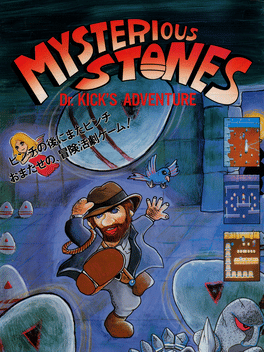
Mysterious Stones: Dr. John's Adventure, known as Mysterious Stones: Dr. Kick's Adventure in Japan, is an arcade title produced by Technos in 1984. In this game you play as the titular Dr. John, an archaeologist who travels around the world exploring temples and finding stones. Break open as many stones as possible to acquire rare artifaces while avoiding or defeating the temple guards.Majestic Twelve: The Space Invaders Part IV
1990
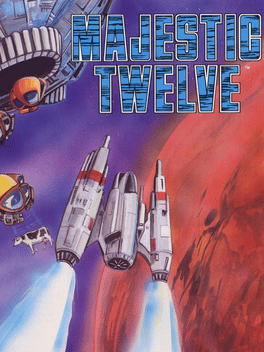
Super Space Invaders '91 was produced by Taito in 1990. The gameplay adheres much to the original, making it very easy to play. The object in most cases is to simply clear the screen of invaders before they reach bottom. Every so often, however, a boss invader appears that must be hit multiple times to be destroyed.NebulasRay
1994
NebulasRay
1994
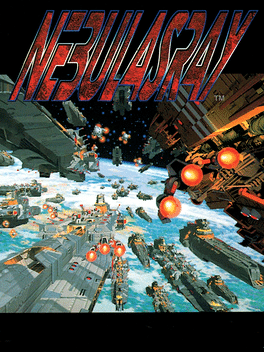
NebulasRay (ネビュラスレイ Nebyurasurei?) is a vertical scrolling shooter arcade game that was released by Namco in 1994 (but was first referred to, in the Katakana syllabic writing system of the Japanese language, in the ending for Tinkle Pit in 1993); it runs on the company's NB-1 hardware, and the players assume control of two spaceships called the "Fighting Rays" (red for Player 1, blue for Player 2), through six areas (Exeo, Evergrenes, Lost Marinarc, Sandvurn, Stream Drive, and Master Fortress), along with an "extra" one called the "Challenging Area" (which is the same as the first one, but the players will only have one life to get through it, for their remaining lives will have been added to their scores, after defeating the sixth area's boss). Nebulas Ray has many 3-D elements and very detailed graphics.Trio the Punch: Never Forget Me
1990
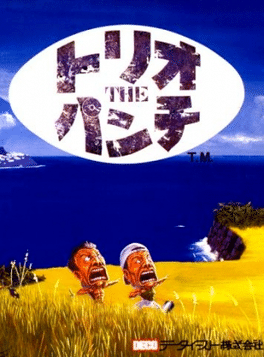
Trio The Punch is a beat 'em up game where the player chooses a character from three playable characters, and fights numerous enemies across a side-scrolling game screen. Most of the levels are played scrolling to the right, but some loop around the left and right edges of the screen. Other levels allow the player to scroll upwards or downwards by jumping, while some do not contain scrolling at all. The game is completed when the player finishes all 35 levels. The player controls their character with an 8-way joystick and 3 buttons (attack, jump, and special attack). Certain enemies leave behind a heart on the screen after being defeated, and collecting the required number of these hearts for each level causes a boss to appear, who must be defeated in order to complete the level. However, bosses appear from the start in some levels, so hearts do not always need to be collected.Laser Clay Shooting System
1973
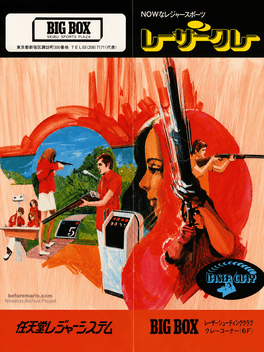
The Laser Clay Shooting System is a light gun shooting simulation game created by Nintendo in 1973. The game consisted of an overhead projector which displayed moving targets behind a background; players would fire at the targets with a rifle, in which a mechanism of reflections would determine whether or not the "laser shot" from the rifle hit the target.Athena In Wonderland
1986
Athena In Wonderland
1986
In this game, players take the role of Athena, the Goddess of Wisdom, who has grown tired of her life within the castle and ventures into the Fantasy World beyond the castle walls. Strange and fearsome creatures will attack at every turn, but weapons can be found along the way: a ball and chain, a bow and arrow, and a mighty sword. Put on wings and take to the sky, or become a mermaid to explore the ocean depths.Dyna Gears
1994
Dyna Gears
1994
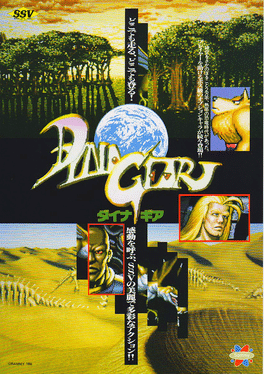
Dyna Gear: An Action Adventure On The Era Of Dinosaur is a 2D arcade platform game. The player can choose from two characters - Roger and Wolf. Gameplay is fast and simple - just run left and shoot enemies. Heroes can use various weapons, like swords, flails or arrows. The world in Dyna Gear: An Action Adventure On The Era Of Dinosaur is full of dinosaurs and various strange creatures.Macross II
1992
Macross II
1992
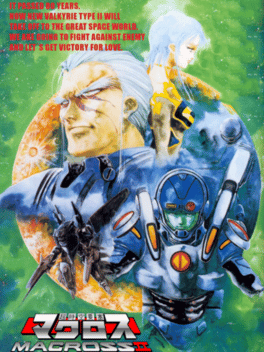
Super Spacefortress Macross is a vertically-scrolling shoot'em up based on the 1984 theatrical film in the Macross franchise, commonly known in English as Macross: Do You Remember Love?. Players control the VF-1 Valkyrie fighters of ace pilots Max Jenius and (in two-player games only) Hikaru Ichijyo in combat against the Zentradi. The game consists of seven levels, mostly based on action scenes from the film, including confrontations over Macross City, in the rings of Saturn, the surface of the devastated Earth, and the final battle against Boddole Zer. Gameplay is similar to Raiden: the Valkyrie can transform into one of three different modes by collecting the appropriate power-up: in Fighter mode, the ship fires a spread shot, Gerwalk mode has a narrow but powerful laser that passes through enemies, and Battroid mode features homing missiles. The intensity of the attacks can be upgraded in three stages through another power-up. There are also smart bombs to pick up that clear most enemies off the screen with onMach Breakers
1994
Mach Breakers
1994
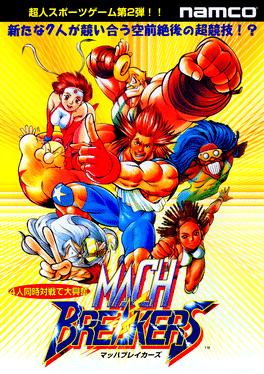
Mach Breakers: Numan Athletics 2 is a sports arcade game that was released by Namco in 1994 only in Japan; it runs on Namco NB-2 hardware and is the sequel to Numan Athletics, which was released in the previous year.Lizard Wizard
1985