New Games - Page 12221

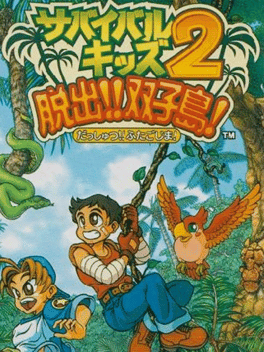
Survival Kids 2: Dasshutsu!! Futago Shima!
2000
2 brothers are seperated on Twin Islands and need to figure out how to escape the island alive. Survival skills are put to the test, as you hunt for food, make shelter and explore the great unknown islands.Gekitotsu Toma L'Arc: Tomarunner Vs L'Arc-en-Ciel
2000
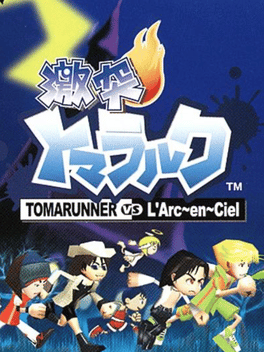
Gekitotsu Toma L'Arc: TomaRunner vs L'Arc-en-Ciel is a Japan-exclusive racing game for the PlayStation. It is the sequel to TomaRunner and includes members of the Japanese band L'Arc-en-Ciel as playable characters. Each member of the band voices the in-game characters themselves. The L'Arc-en-Ciel songs that play within the game are "Driver's High", "Stay Away", "Route 666", "Trick", and "Niji". The game was popular enough to receive a PS one Books re-release on December 21, 2001. The dream has finally become reality with the help of L'Arc en Ciel! Every fan must have this! And of course, there is fun to be had with this game. This summer, why don't you try the Tomarunner experience for yourself?Sense Off: A Sacred Story in the Wind
2000
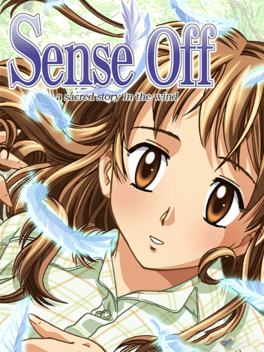
The protagonist of the story, Naoya, was hospitalised after getting in a bicycle accident. During his treatment, it is found that he exhibits a number of unusual brain wave patterns, and he is asked to move into a particular Cognition Dynamics Research Laboratory to undergo further testing, along with a handful of other young people who exhibit similar characteristics. With his newfound friends, Naoya takes classes, has fun and lives peacefully in blissful ignorance of the truth behind their gathering together. While it is difficult to say much about the story without spoiling a good deal of the enjoyment, 'sense off' is not a title to underestimate, and in whichever route you end up going down, the story will quickly spiral into something far more intricate and detailed than you likely thought possible.Bikeflyter
2000
Bikeflyter
2000
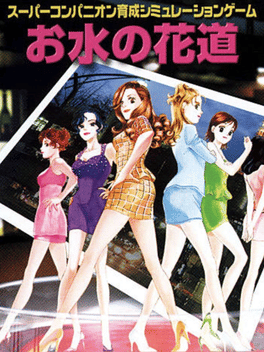
BikeFlyter is an advertising action game, created for the Aral AG company. The player controls a fat fly which is flying down a road, and must avoid oncoming bikers. By holding the left mouse button, the player can speed up; the faster the fly is going, the more score the player receives for avoiding bikers. Each collision slows the fly down and takes away one life, and the game is over once all lives are used up.Omizu no Hanamichi
2000
RC Revenge
2000
RC Revenge
2000
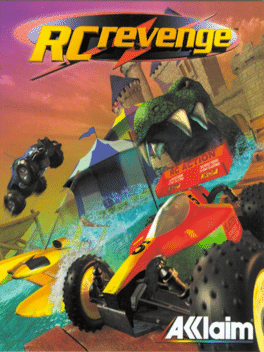
Players take control of a range of remote controlled cars and boats in an action packed racing game for the Sony PlayStation. Based around an enchanting movie Theme world, players take their cars through a number of genre styled levels, including horror, sci-fi and cartoons. Multiplayer split screen racing available in all modes of the game and a unique track editor allows you to create your own tracks to save on memory card and challenge your friends.World Series Baseball 2K1
2000
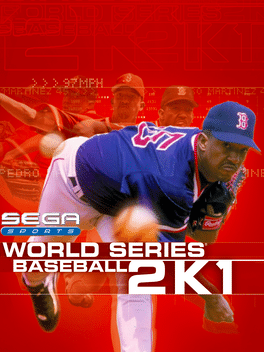
World Series Baseball 2K1 is a sports video game developed by Wow Entertainment and published by Sega for the Dreamcast. It was the first game in the modern series to be featured on the Dreamcast, and was the spiritual successor to World Series Baseball for the Sega Genesis.[citation needed] It was released in July 2000 to coincide with the 2000 Major League Baseball All-Star Game in Atlanta.[citation needed] World Series Baseball 2K1 featured a cutting-edge graphical presentation adapted from the NAOMI game Super Major League, and its visuals were well ahead of any other baseball game at the time. Unfortunately, a lack of features, shoddy audio presentation, and major gameplay flaws meant that WSB2K1 was not well received by critics despite its fantastic graphics. The game is notorious for its sometimes-unresponsive controls, as well as the fact that manual fielding—a staple of baseball games for a half-decade prior to WSB2K1's release—isn't even an option available to players.[citation needed] After the debStay.: Fragments of Memories
2000
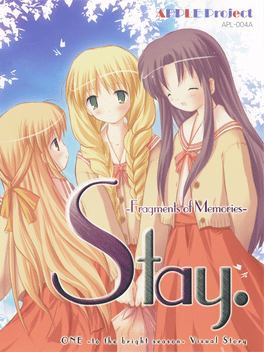
Doujin game inspired by ONE ~Kagayaku Kisetsu e~. Contains three separate stories with three different protagonists: "Stay.": Nagamori Mizuka tries to cope with Kouhei's sudden disappearance. "Before it turns into a memory": Kawana Misaki tries to find out what happened to Orihara Kouhei, with the help of Kouzuki Mio and Miyama Yukimi. "Sweet": Orihara Kouhei and Satomura Akane enjoy their daily life as boyfriend and girlfriend.Star Wars: Early Learning Activity Center
2000
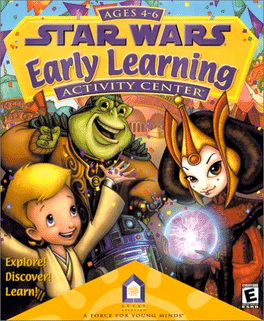
Join Queen Amidala and Boss Nass as they lead the people of Naboo and the Gungans in a fun-filled celebration. Star Wars: Early Learning Activity Center is a playful introduction to the world of Star Wars, designed for young learners. It provides a learn through play experience in a celebratory setting, featuring open-ended and directed play set in two exciting cities. Showcase your talents in music, dance and puppetry. Improve skills in sequencing, sorting, classifying, and following directions.Tenchu 2: Birth of the Stealth Assassins
2000
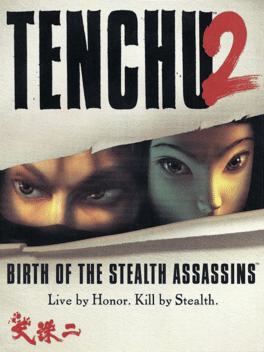
star 8.1Tenchu 2 is a prequel to Tenchu, telling a tale of events prior to those of the previous game. Once again, you can play as Ayame or Rikimaru, two faithful and honorable ninja whose lord is a gentle man in an age of warfare. With your training nearly complete, you find yourself caught up in aiding your lord against a civil war in his own domain. All is not what it seems, however, and you'll soon realize that your greatest threat has been forged much like you. Much like its predecessor, Tenchu 2 is a 3D third person stealth action game. You are not only rewarded for stealth, but also for efficiency of movement this time. This extra feature increases the difficulty of achieving the better items, as you not only have to be quiet, but be direct and near perfect in your steps.Yuugao
2000
AyuPac
2000
AyuPac
2000
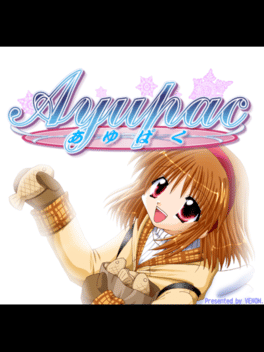
AyuPac is a parody of Pac-Man themed around Ayu Tsukimiya from Kanon and her love for taiyaki.Capcom vs. SNK: Millennium Fight 2000
2000
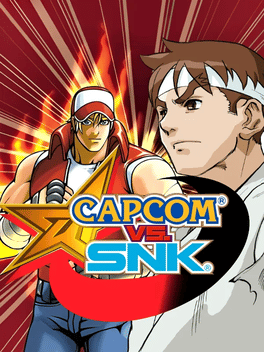
star 8.9Two of the worlds greatest arcade fighter developers, Capcom and SNK, join forces to finally answer the question asked by many for years: Who is the dominant fighter? A range of fighters from both worlds are available to choose from, with two different fighting styles (Capcom and SNK, of course) meaning that players of both worlds can fit into the game easily, while new gamers can try Ryu using the SNK format.SD Gundam G Generation: Gather Beat
2000
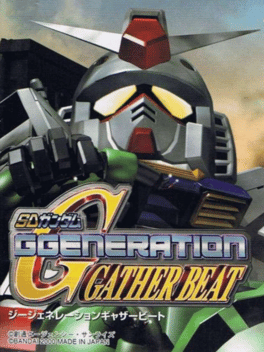
SD Gundam G Generation: Gather Beat is a Strategy game, developed by Vanguard Works and published by Bandai, which was released in Japan in 2000.Kaitei Taisensou!! Treasure World
2000
An adventure game where you travel around the world to find your friends and legendary treasures. You can enjoy the real thrill of the eternal theme "Treasure Hunt" that everyone is interested in. In order to break the seal of the ancient civilization, the main character becomes a treasure hunter looking for the ancient civilization that has sunk to the seabed due to crustal movement, and with the hint of the treasure called Great Treasure that sleeps in the seas around the world, the legendary treasure World Treasure Go on a voyage to look for it. Make full use of various items such as a variety of mini games and submarines to raise treasure.K.O.: The Pro Boxing
2000
K.O.: The Pro Boxing
2000
Supervised by JBC (Japan Boxing Association). The boxing life is beautifully reproduced in the game. Steady practice is a training simulation, and the game is a real-time action that actually operates the trained boxer. You can create and select your favorite boxer, and there are countless boxer creation patterns such as height, class, and face. It's up to the player to take advantage of their abilities and to train to reinforce their weaknesses. Not only the basic movements of boxing, but also the special moves unique to the game are hidden.Jissen Yakudatsu Tsumego
2000
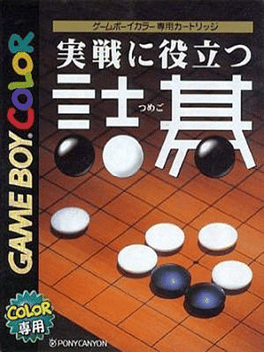
A puzzle game where players solve life and death go problems. It is solely go puzzles, there is no AI or board game aspect to it.Docking Doom
2000
Docking Doom
2000
Duke is a regular cargo inspector, sent to orbiting space docks to check for illegal cargo. As a routine check up on the dock station, Zero Alpha, finds Duke uninterested, a sudden distress signal comes up for only a second. Duke grabs his pistol and locks and loads.Kaze no Tansakusha: Grand Slam
2000
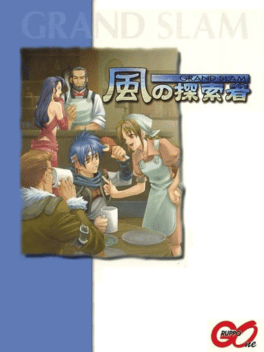
A Japanese rogue-like RPG developed by Gruppo One. The game's aesthetics are influenced by tabletop gaming, with the characters designed to look like figurines moving through dioramas.