New Games - Page 12293

Global Domination
1999
Global Domination
1999
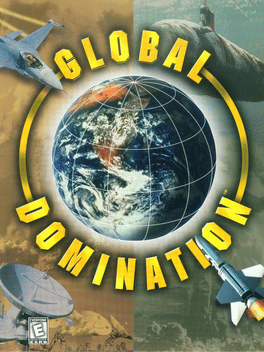
Dive into total global conflict as a military operative for hire. Determine your strategy for world domination. Stage missile strikes on enemy strongholds. Bomb smaller neutrals to build your base of power. Defend unaligned countries to gain their allegiance. With a blistering arsenal and a host of strategic options, you're geared for all-out war as you fight your way to the top of the world. Wield state-of-the-art missiles, fighters, subs, satellites, nuclear arms and a brutal doomsday device. Utilize the scenario editor to customize game components, including technology levels and victory conditions. Challenge up to 16 opponents in multiplayer warfare over LAN or serial link. Take on 20 missions, utilizing live action briefings to stay abreast if mission goals and vital developments. Attack View: Command attacks and countermeasures via a spinning 3D globe interface. Fire offensive and defensive weapons around the world with pinpoint accuracy. Tactical View: Monitor enemy activities and targets in 56 countrSteel Panthers: World War 2
1999
Steel Panthers: World War 2 started out as a mod for Steel Panthers II: Modern Battles and was turned into a full standalone game.The Famous Five: Treasure Island
1999
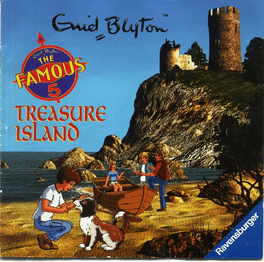
Enid Blyton The Famous 5: Treasure Island is the first episode in Ravensburger's The Famous 5 series after the books of Enid Blyton for ages seven and up. Julian, Dick, Anne, George and the dog Timmy are staying at Kirrin Cottage and are on a treasure hunt. You have to foil the plans of a devious professor that has suspicious interest in the old shipwreck off Kirrin Island.M25 Racer
1999
M25 Racer
1999
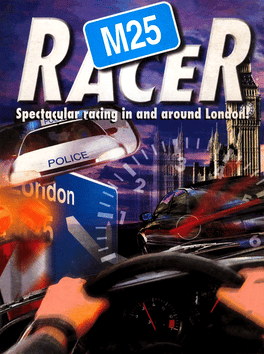
Arcade racing in and around London in a variety of cars. Compete in three leagues - small cars, luxury sports cars and GT racers on your way to winning the title and the ultimate car. In this UK-customised racing game you drive on the left, knock down Gatsos (speed cameras), and get chased by police in Vauxhall Astras and much more.Chicken Invaders
1999
Chicken Invaders
1999
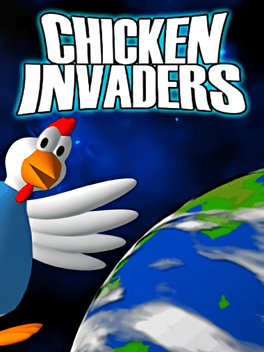
star 7.2Sometime in the near future, Earth is invaded by chickens from another galaxy, bent on revenge against the human race for oppressing earth chickens! Take the world's fate in your hands (or at least have an omelette) in this modern rendition of the 80's classic. Save the world today!The Typing of the Dead
1999
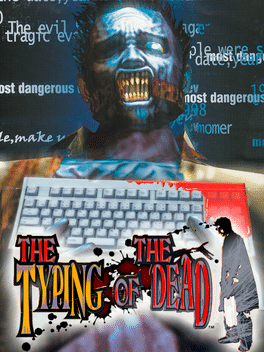
star 7.2The Typing of the Dead is an arcade game that was developed by WOW Entertainment and published by Sega for the NAOMI hardware. The game was released in Japanese arcades in 1999 and was ported to the Sega Dreamcast in 2001 by Smilebit. A Windows version was released in 2000 and a PlayStation 2 port followed in 2004. The Typing of the Dead is a modification of Sega's 1998 light gun arcade game The House of the Dead 2 in which the gun is replaced by a computer keyboard. The player takes the role of a secret agent in a zombie-infested Venice and must quickly type letters, words and phrases in order to kill fast-advancing enemies.The Settlers III: Quest of the Amazons
1999
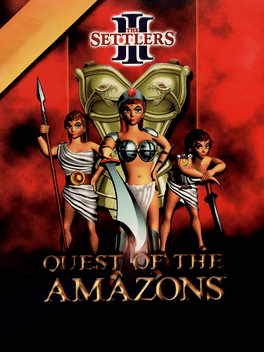
star 7.9The official expansion pack for The Settlers III.Atlantis 2: Beyond Atlantis
1999
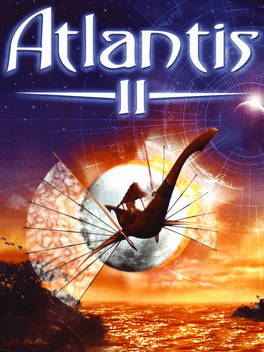
star 5.5The appearance of the Super Nova of the Crab in the skies has awakened the light half of the force. Ten, descendant of the original Hero of Atlantis, holds within him the key to the mystery. He is bound on an adventure to Tibet, where he will gradually discover his destiny from a wizened old shaman. From quest to celestial journey, his path will be strewn with traps and enigmas that he must solve to re-establish the order and balance of the Universe set-up hundreds of years ago. If he fails then the dark half of the force will be triumphant and will bring back the times of chaos once again. Atlantis II plunges you into an adventure unlike any other. Discover beautiful settings, mysterious puzzles, unusual characters, and strange creatures.Corsairs: The New Conquerors
1999
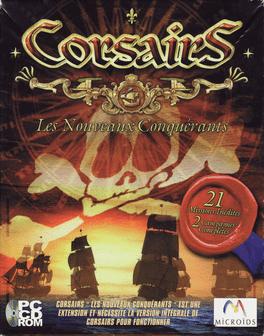
The New Conquerors is an expansion disk for Corsairs: Conquest at Sea. New features include: Two new campaigns, allowing the player to play as a privateer for two new nations: Spain and Holland 21 new missions A new 'Adventure mode, which is a sandbox mode containing five maps the player can explore freely, without fixed objectives This data disk also allows players to access the new Corsairs Gold content.Carmageddon 64
1999
Carmageddon 64
1999
Carmageddon 64 was a port of Carmageddon II, released for the Nintendo 64 video game console in 2000. It was developed by Software Creations, and due to be published by Interplay, but it was published by Titus Entertainment after they bought the company. The game featured opponents and levels from Carmageddon II, as well as a couple of exclusive characters.Cruis'n Exotica
1999
Cruis'n Exotica
1999
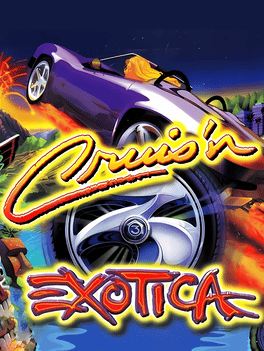
star 7.5GET EXOTIC! …from Atlantis to Mars and everywhere in between. Race in style! Cruis’n Exotica takes you to fantastic locales in even more fantastic vehicles. Race through steamy Jurassic jungles or on the ocean floor. Midair stunts keep the action nonstop! Valuable shortcuts and nitro boosts speed up the already fast-paced action! Fantastic driving excitement straight from the arcade! 28 exotic cars to race! 1 to 4 player non-stop racing action! Turbo boosts, stunts, nitros and more! 60 tracks from around the world! Three modes of play to choose from!Skout
1999
Skout
1999
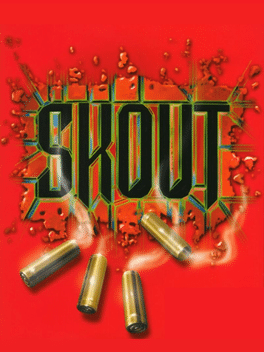
Humanity's most dangerous enemy, the Kybernoids, have invaded and occupied Lugubrios, a planet of paramount strategic value. The Kybernoids have built a shield generator, protecting the planet from any kind of attack. You are Skout and it's your mission to destroy this generator and to free the enslaved population.Supreme Snowboarding
1999
Supreme Snowboarding
1999
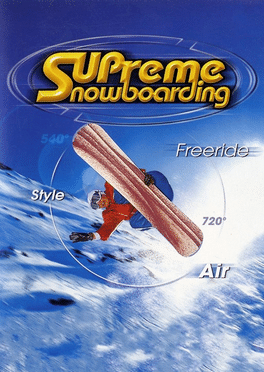
star 6.1Supreme Snowboarding is the first snowboarding game that allows players to experience pure freedom, with the possibility to choose your very own way down the slopes. 10 race tracks, three half-pipes and three straight jumps offer something for everyone, from straight race maniacs to pipe-loving daredevils. Select a character, choose a board and hit the slopes, dude! It was one of the first snowboarding games for Windows to take full advantage of 3D graphics cards that were becoming the norm in the late 1990s, and eventually became an internationally bestselling game. Over 1.5 million units were sold worldwide, allowing Supreme Snowboarding to become the first hit title in Finnish game development.PetWings
1999
PetWings
1999
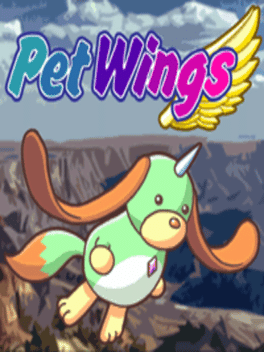
PetWings is an arcade style shooting game with cute cartoon-style graphics. It has 53 game levels, 5 huge bosses and 6 levels of fire power-ups. The controls are super-easy. PetWings is suitable for all ages.Little Fighter 2
1999
Little Fighter 2
1999
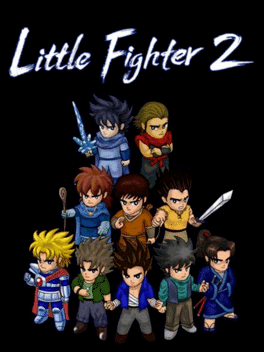
star 7.1Little Fighter 2 is a popular Hong Kong freeware PC fighting game for Windows and is the sequel to the game Little Fighter (LF1). Little Fighter 2 was created by Marti Wong and Starsky Wong in 1999, and released in a long series of updates. The game supports up to 4 human players on one computer and a total of 8 characters using online play or computer-controlled opponents. Characters are controlled using the keyboard or a gamepad. All keys can be set via a configuration menu. The game has a commercially released sequel, Little Fighter Online. In 2009, in celebration of Little Fighter 2's tenth anniversary, version 2.0 was released. The update fixed minor bugs and added a gameplay recording feature, a new stage called 'Survival', a browser toolbar that is not mentioned in the installation process and obstructive ads being displayed while the game is being loaded. Version 2.0a was released in late 2009, with only a bug fix.Mortyr 2093-1944
1999
Mortyr 2093-1944
1999
star 5.9The Nazis won World War II with technology from the future and now the future is paying for it with deadly electrical storms. You are a renegade mercenary sent back to World War II Germany to stop the weapon being built and therefore save the future.Jambo! Safari
1999
Jambo! Safari
1999
In Jambo! Safari, players use a steering wheel and a gear shift to pursue animals in a jeep and catch them using a lasso. Players can select from four different player characters and several different vehicles to drive.No Fear Downhill Mountain Biking
1999
star 7No Fear Downhill Mountain Biking is a mountain bike video game released in 1999 on PlayStation and 2001 on the Game Boy Color, Dreamcast version been planned but never released. The game was developed and published by Codemasters. An extreme sports game, the mountain bike consists of mountain tracks from circuits around the world of varying difficulty. The game was inspired by tracks including San Francisco's Telegraph Hill and New Zealand's Matukituki Rapids. The game has eight different riders and a number of tracks for the bikes to descend.