New Games - Page 12331

Incredible Crisis
1999
Incredible Crisis
1999
star 7.4It is grandmother Haruko's birthday. She wants everyone home early for her special day: the day that serves as a reminder that she has been alive for more years than she can remember. Unfortunately, her family has completely forgotten and make up last-minute birthday promises to Haruko. The game begins like any other normal day for the family members - father Taneo, mother Etsuko, daughter Ririka, and son Tsuyoshi - until strings of events stand as obstacles in their way of returning to Haruko's with the presents.Guwange
1999
Guwange
1999
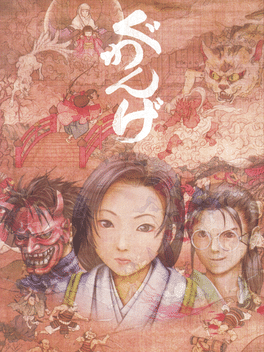
star 7Guwange is 2D vertically scrolling shoot'em up played with a character moving on foot. The game takes place during the Muromachi period in Japan with strong fantasy elements. The shikigami demons possess the people and give them great opportunities, but they die after exactly one year. Three heroes want to get rid of the curse. They must kill the evil deity Guwange, but first they must find five elemental scrolls. The game belongs to the "bullet hell" range of shooters, with lots of bullets on the screen where precise movement and pattern detection is required. The player can choose from three characters, each with a different attack style. They can be moved around the screen and need to shoot enemies and bosses. They have access to basic weapons and special shots, but as the characters move on foot, they cannot shoot enemies on rooftops or freely move around the level when there are structures or obstacles in the way. The player can summon shikigami, increasing firepower. The Xbox 360 version has two additionalTokyo Xtreme Racer
1999
Tokyo Xtreme Racer
1999
Tokyo Xtreme Racer is a racing video game released in 1999 as one of the console's launch titles, the game was one of the first mission-based racing games. The gameplay involves the player challenging other drivers on the Shuto Expressway in order to gain money to modify and enhance his or her car. The game features a wide variety of Japanese cars and tuning parts to purchase as the player progresses through rivals. When released in Japan, Shutokō Battle was one of the best selling Dreamcast titles at this time. The game is based on illegal highway racing in Tokyo's Wangan highway with custom tuned cars. A such phenomenon is growing popular in Japan since the 1990s with dedicated manga (Shutokō Battle's biggest inspiration being Wangan Midnight), anime series and video games (C1 Circuit, Wangan Trial, Naniwa Wangan Battle).Persona 2: Innocent Sin
1999
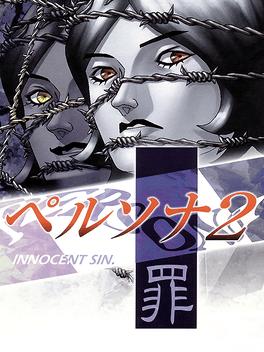
star 7.4Persona 2: Innocent Sin is a Japanese role-playing video game developed and released by Atlus It is the second entry in the Persona series and acts as a sequel to the original Persona. The original version was not localized for western territories, but the PSP version was released in North America and Europe under the title Shin Megami Tensei: Persona 2: Innocent Sin. Innocent Sin takes place in the fictional Sumaru City, focusing on a group of high school students from Seven Sisters High School. The main protagonist, Tatsuya Suou, and a group of friends must confront a villainous figure called the Joker, who is causing the spread of reality-warping rumors through the city. The group are aided in their quest by their Personas, personified aspects of their personalities. The gameplay features turn-based battle gameplay, where characters use their Personas in battle against demons, and a separate Rumor system, where rumors spread around the city can influence events in the characters' favor.Radikal Bikers
1999
Radikal Bikers
1999
Radikal Bikers is the playstation port for the racing arcade game Radikal Bikers.Ape Escape
1999
Ape Escape
1999
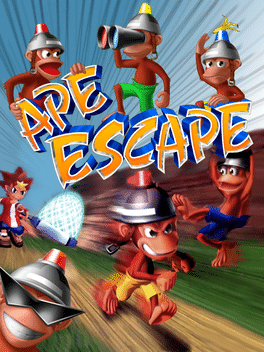
star 7.7Ape Escape is a single-player 3D platformer released in 1999 for the Playstation. Using the analog stick, you must capture apes that have escaped throughout time to stop them from screwing up the fabric of time and space.Need for Speed: High Stakes
1999
star 8The PC version has differences in the modes that there are, in addition to an exclusive feature with the credits that the PlayStation version doesn’t have.Kinnikuman Muscle Fight
1999
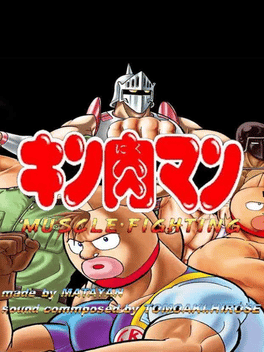
Muscle Fight is a free competitive fighting game released in 1999 by Matayan. Based on the Yudetamago manga "Kinnikuman", created using Enterbrain's (formerly ASCII) software "2D Fighting Maker 95".Escape From San Angelos 5
1999
Having successfully escaped san-angelos, found the transporter to the alien home world ( levels one thru three ), and liberated the clandestine transporter research facility ( level four ), the time has come to deal with the real evil.... the alien sympathizers.Quake: Bestial Devastation
1999
Very large industrial/Zerstorer-inspired zone with great details and gameplay. Recommended to use with Zerstorer, but works in id tech 1 too, then it is quite hard. Made in 1999 by John "DaMaul" McCann and stood the test of time fairly well.Descent 3: White Label Edition
1999
Descent 3: White Label Edition compiles the original game and the Mercenary expansion.The Mystic Dragoons
1999
The Mystic Dragoons
1999
The hero (a dragon knight blood boy) was born and raised in the Dragon field, and he will be involved in the war between the Dragon Knights and their rivals. The game begins when the small village where the hero lives and where they train and take care of the dragons is attacked by an evil army that killed most of the villagers and the dragons, but the hero, his friends and a little egg got to escape and soon the from the egg a dragon baby raises. The hero and his friends decide to go on a journey to take revenge and destroy that evil army, but things will be an easy task for sure... As a Dragon knight he can control the Dragons and ride them. He will have to use the help of his friends and the dragons to come along throught the story. The game features beautiful 2d cartoon graphics and the classic turn based rpg in the battle part.Ore no Shikabane wo Koete Yuke
1999
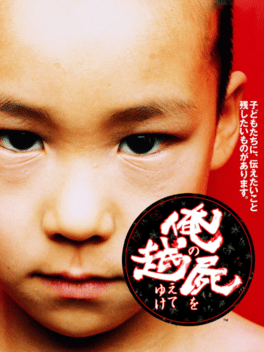
Ore no Shikabane wo Koete Yuke (roughly, "over my dead body,") is a dungeon crawler RPG where the player controls a clan of warriors, cursed to die young, over several generations as they try to defeat the demon that cursed them. Aside from combat, the player must also manage the clans resources, and ensure a new generation is ready to take over when the curse kills their parents. Set in ancient Japan, the game is heavily influenced by traditional Japanese art and mythology.Meltylancer: The 3rd Planet
1999
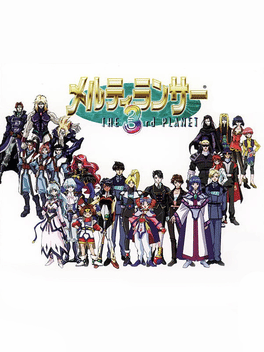
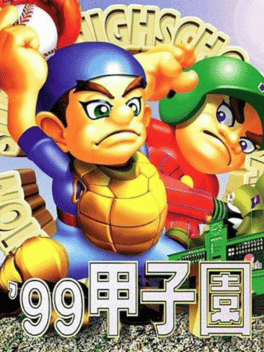
MeltyLancer: The 3rd Planet is the third and final game in the MeltyLancer series of sci-fi police simulation games. This entry features a new main cast of characters, as well as significant differences in the simulation gameplay. Rather than training the abilities of individual officers through schedule management, this entry takes more of a business-simulation approach with the player sending lancer teams on group missions; the success rates of these missions affect public confidence in the government. Each Lancer's stats will affect their ability to successfully complete missions, and if too many missions are failed the game will be over. Battles may occur during missions, which take a semi-automated turn-based format.'99 Koushien
1999
Survival Kids
1999
Survival Kids
1999
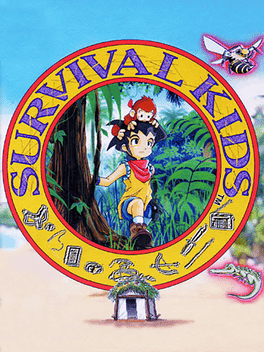
star 8You wash up on the shore of a deserted island after the cruise ship that you were on with your parents sank in a storm. Unfortunately, your parents are nowhere in sight. Starting with only a knife and a broken radio, you must learn how to survive on the island until someone can rescue you. Food, water, and rest are your main concerns. Luckily, there are plenty of berries, mushrooms, and meat around the island and fresh water flows in all of the streams. As another stroke of luck, there are hollow trees that provide a comfortable place to take a nap. Rather than spend your whole time looking for food and water, collect as many items that a scattered throughout the island. Rocks, sticks, leaves, and other items can be turned into tools that will make your life easier. Try to survive until you are rescued in SURVIVAL KIDS.Tekken Card Challenge
1999
Tekken Card Challenge is a turn-based fighting game released only in Japan for the WonderSwan. It uses the characters from Tekken 3 plus an exclusive character to the game named Crow.Descent 3
1999
Descent 3
1999
star 7.8The gut-wrenching Descent saga continues with more pulse-pounding action than ever before. Dive into massive subterranean strongholds and experience a whole new degree of freedom, as you careen through canyons and craters on the surface above... powered by the all-new Fusion engine. Test your piloting skills against an army of battle-drones and assault-bots using an extensive arsenal of tactics and heavy firepower.Alien Invasion
1999
Alien Invasion
1999
Alien Invasion is a total conversion for Duke Nukem 3D: Atomic Edition. It was created by Fred Hero and released on June 16th, 1999. It contains new levels, new graphics (including graphics from Wolfenstein 3D, Doom, Doom II, Shadow Warrior, Blood, and Rise of the Triad: Dark War) new voice-overs (including voice-overs from Shadow Warrior), and new music (including music from Doom, Shadow Warrior, Blood, and Rise of the Triad: Dark War).HyperBowl: Arcade Edition
1999
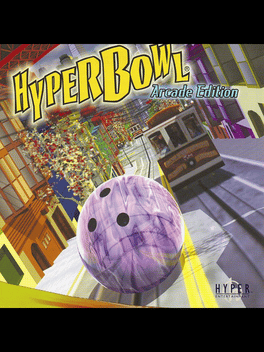
HyperBowl scores just like conventional bowling, but the style of play is entirely unique. In this virtual bowling game, you can steer the ball all the way to the pins! Sound too easy? Not really -- you must dodge trolley cars in San Francisco 2099, leap buses on the streets of Tokyo, navigate across a pitching ship on the High Seas, and avoid whatever other obstacles are thrown your way. Players seeking more predictable play can always fine tune their skills in a Classic bowling alley or bowl through a peaceful Yosemite forest.