New Puzzle Games - Page 305

Tamori no Picross
1995
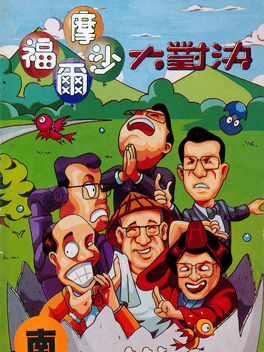
Formosa Duel
1995
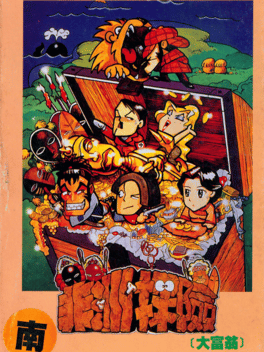
Fēizhōu Tànxiǎn
1995
Cliff Johnson's Labyrinth of Crete
1995
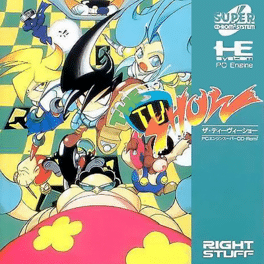
You're a skillful thief condemned to death for trying to steal from the temple of Hera. However, Zeus himself frees you and gives you a task. Solve the puzzles of the Labyrinth of Minos on Crete to keep the Minotaur in and you may live.The TV Show
1995
Block Kuzushi GB
1995
Block Kuzushi GB
1995
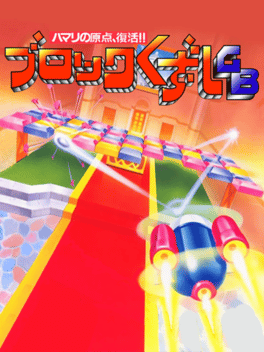
Block Kuzushi GB is an Action game, developed by OeRSTED and published by Pow, which was released in Japan in 1995.Pac-Panic
1995
Pac-Panic
1995
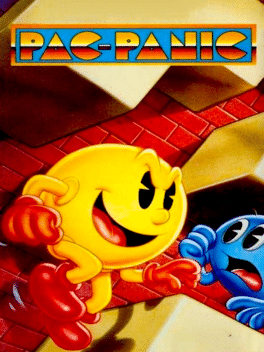
Much more than the return of the ghost-chompin' legend, PAC-PANIC is a think-fast challenge and a puzzle game, too. As the blocks, you gotta think quick and move quicker, to line 'em up and make 'em vanish.Rollin
1995
10 out of 10: Essential Science
1995
10 Out Of 10 Essential Science is an educational game for children learning basics of scienceTecmo Stackers
1995
Tecmo Stackers
1995
If you're looking for a game that the whole family can enjoy, then look no further than TECMO STACKERS. Against the computer or a friend, you'll go head-to-head in some fast-paced puzzle games that will bow you away. The object is to fill your opponent's side of the board while keeping your own side clear of any blocks. If you connect four quads (blocks) of the same color, you'll create a chain reaction that will really give you an advantage. If you find yourself in a pinch, utilize a bomb to temporarily clear your board. There are four gameplay modes to choose from Arcade Competition, Time Trials, Chain Reaction, and Insane and more than 20 levels to master, making TEMCO STACKERS one of the most complete action or puzzle games available.Pepenga Pengo
1995
Pepenga Pengo
1995
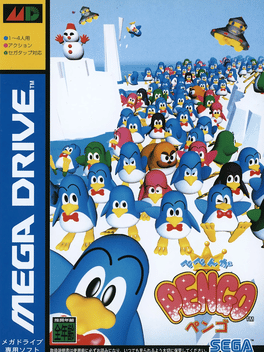
Pepenga Pengo, sometimes just known as Pengo, is a sequel to the 1982 arcade game, Pengo. It was released for the Sega Mega Drive exclusively in Japan in 1995, and was the last first-party Sega Mega Drive game to be released in that region.Chibi Maruko-Chan no Taisen Puzzle Dama
1995
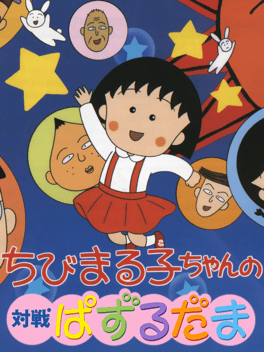
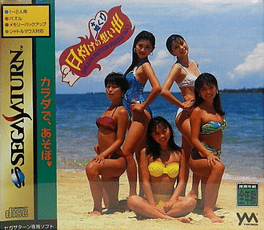
Chibi Maruko-Chan no Taisen Puzzle Dama is a Taisen Puzzle-Dama game featuring characters from the slice of life manga and anime series Chibi Maruko-Chan.Hiyake no Omoide & Himekuri: Girls in Motion Puzzle Vol. 1
1995
Puzzle game released for the Sega Saturn in 1996. It was followed by Girls in Motion Puzzle Vol. 2Ninku Gaiden: Hiroyuki Daikatsugeki
1995
Ninkuu Gaiden: Hiroyuki Daikatsugeki (忍空外伝 - ヒロユキ大活劇) is a Sega Game Gear top-down action game based on the Ninkuu franchise.Bugtris
1995
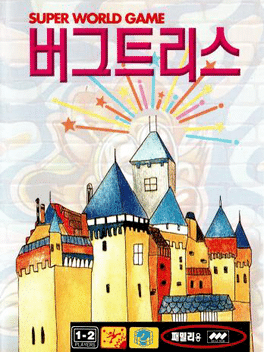
Bugtris
1995
BugTris (버그트리스) is an unlicensed variant of Tetris published by Game Line. The developer is currently unknown. The main objective of BugTris is to capture bugs that are hiding inside blocks. The player finds these bugs by clearing lines with blinking blocks, then catching the bugs with a net. Once all the bugs are captured, the game continues to the next level. The game ends after level 30 is completed.Tokimeki Memorial: Taisen Puzzle-Dama
1995
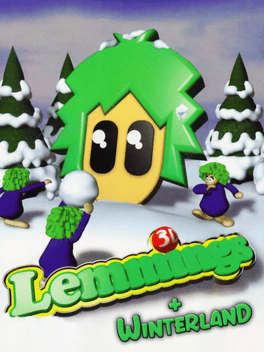
Tokimeki Memorial Taisen Puzzle-Dama is a Tokimeki Memorial themed Taisen Puzzle-Dama spin-off game. It is followed by its sequel Tokimeki Memorial 2 Puzzle-Dama. In the console versions, the player can unlock the secret characters, Rei Ijuin, Yoshio Saotome and Miharu Tatebayashi, as playable characters by beating the game on hard mode with every girl at least once. As for the arcade version, all 3 can be unlocked by inputting a cheat code.3D Lemmings Winterland
1995
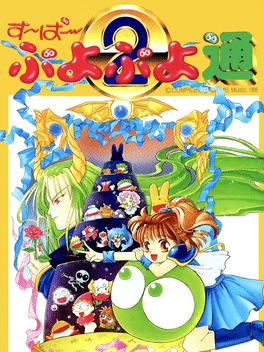
3D Lemmings Winterland is a special mini-demo of Lemmings 3D, featuring special snowy wintry graphics. Apart from this, the gameplay is identical to that of Lemmings 3D. The game consists of 6 levels which are not featured in the original full game.Super Puyo Puyo 2
1995
Super Puyo Puyo 2
1995
star 7.4A falling-block puzzle game in which players combine four or more blocks of the same colour to make them disappear. The remaining blocks then fall, potentially creating combos that send special nuisance blocks to the opponent’s field; these can only be cleared by removing adjacent blocks. The game includes a story mode, in which Arle faces computer-controlled opponents, as well as a two-player versus mode, a four-player mode, and an endless mode.