Most Popular Arcade Games - Page 108

Ozon I
1983
Paddle Mania
1988
Paddle Mania
1988
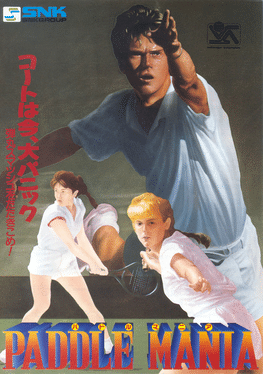
Various paddle games played with different themes, backgrounds, and theme music. Progress through nine courts with increasing difficulty. Timed play, two minutes per credit. Continue option.Pang Pom's
1992
Pang Pom's
1992
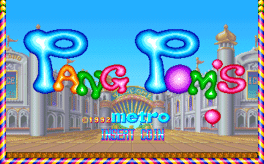
Pang Pom's is a single screen platform game in which players must burst all of the balloons on the screen by jumping on and kicking them to advance to the next stage. Some of the balloons reveal bonus points, enemies or power-ups like a clock that temporarily stops time, a jet pack that increases jumping ability and a star that makes the player invincible for a short period.Lode Runner: The Dig Fight
2000
This upgrade to the popular computer game adds a two-player mode and new levels. This game was released in Japan only.Lord of Gun
1994
Lord of Gun
1994
This is a unique gun game that allows you to choose the area you would like to enter as well as the level, ranging from easy to difficult. You can enter shooting galleries or various scenic screens. You must shoot enemies and beasts without killing hostages or the cute animals.The Lost Castle In Darkmist
1986
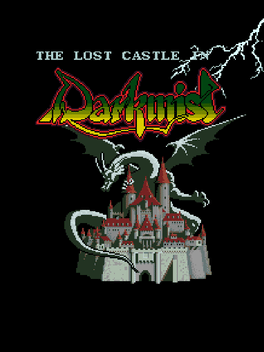
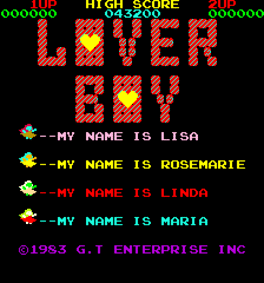
A vertically scrolling fighting game where the player controls a knight who battles against a variety of magical characters. Collect potions, power-ups and bonus items from the treasure chests left by slain enemies. Defeat the boss enemies to proceed to the next level.Lover Boy
1983
Mad Donna
1995
Magical Spot
1980
Magical Spot
1980
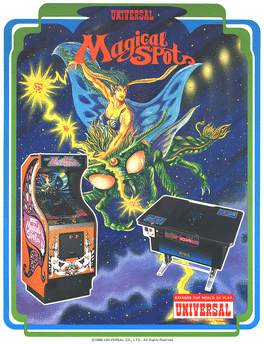
Shoot larvae and grubs dropping from a UFO. Missed larvae will spin cocoons and when a total of seven hatch, they turn into Ultramoths that swarm against your ship. Destroy all the bugs on the screen to increase your rank.Magical Spot II
1980
Magical Spot II
1980
To put it in simple terms, if it moves and it is not your ship, destroy it. This game follows in the same vein as many of the early 1980's space shooters.Major Title
1990
Major Title
1990
A golf game that features single player, two-player and four-player options with tournament or stroke play.Major Title Tournament Leader
1992
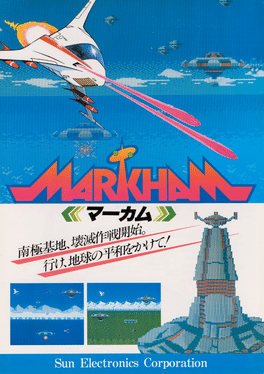
A golf game that features single player, two-player and four-player options with tournament or stroke play.Markham
1983
The Masters of Kin
1988
The Masters of Kin
1988
A sideways scrolling beat-em-up game. Evil roamed free in the lands. Zorg 'The Master of Kin', took his wife to temple and before kissing her, suddenly the evil sorcerer Zangar came and invaded the place and took his wife kidnapped towards his castle. The knight Zorg begins his quest in the outlands of the Kin domain to rescue his wife from the enemy hands.Mayhem 2002
1985
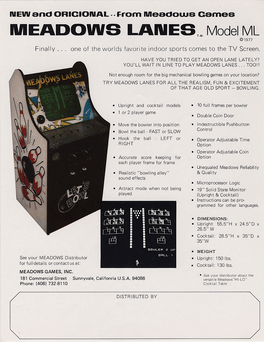
Meadows Lanes
1977
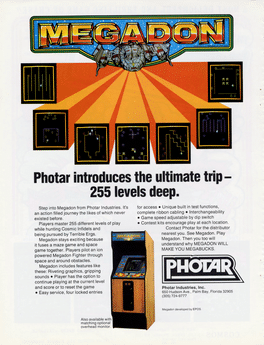
Megadon
1982
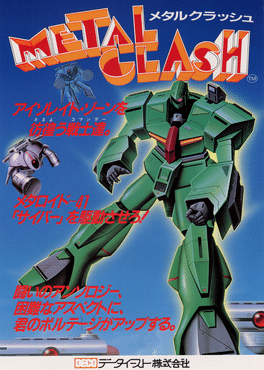
Metal Clash
1985
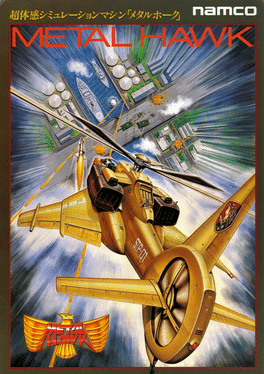
Metal Hawk
1988