New Games - Page 12186

Cannon Fodder
2000
Cannon Fodder
2000
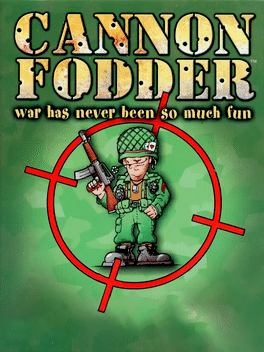
Guide a team of up to six soldiers through 72 levels of combat in this top-down action/strategy hybrid, best thought of as Lemmings crossed with Commando crossed with Dune 2. The characters are controlled indirectly using the mouse, as you activate each soldier or group of them by highlighting them, click the left button to move them to a particular spot, and the right button for them to fire guns at an enemy. You can also pick up grenades or rockets, which can be used to destroy groups of enemies, buildings or some vehicles (by pressing both buttons at once). Each mission has a specific objective, and some feature vehicles such as tanks that used make things easier. Your troops can cross water but can't shoot within it, so finding and controlling bridges is often crucial. You can use the arrangement of trees to find hiding places to shoot from, and should watch out for CPU soldiers also doing so.Hugo: The Quest for the Sunstones
2000
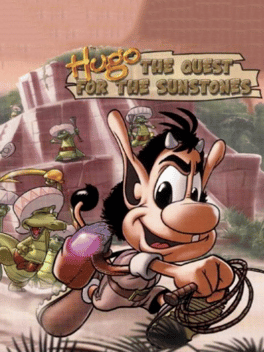
star 5.8The Quest for the Sunstones is a 3D platform jump'n'run game. Like Indiana Jones, Hugo takes on great danger only equipped with a whip. Hugo has to collect three magic Sunstones and place them in the right way and with the sun shining on them he will prevent Scylla and Don Crocos evil plan on causing death to the lovely and sweet creatures called Kikurians and destruction of their village.Keitai Denjuu Telefang: Power Version
2000
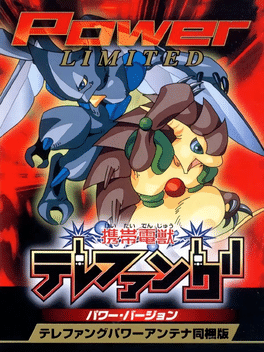
In the year 2020 it has become possible to travel to the Denjuu world using D-Shots, special mobile phones. Making friends and sharing telephone numbers with Denjuu has become popular among humans. The protagonist, Shigeki, despite having originally arrived in the Denjuu world by accident, becomes determined to travel the world with his new Denjuu companion, and make more new friends while he is there. Keitai Denjuu Telefang (Japanese: 携帯電獣テレファング; Romaji: Keitai Denjuu Terefangu), also known as Telefang 1 (since there are two games in this series), is a video game for Game Boy Color released by Smilesoft in Japan. It is available in two versions, Power and Speed. The game was not released in English, and is best known among English audiences for the a bootlegged game version which was hacked and sold as a fake Pokémon game.Keitai Denjuu Telefang: Speed Version
2000
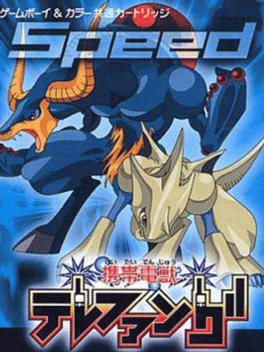
In the year 2020 it has become possible to travel to the Denjuu world using D-Shots, special mobile phones. Making friends and sharing telephone numbers with Denjuu has become popular among humans. The protagonist, Shigeki, despite having originally arrived in the Denjuu world by accident, becomes determined to travel the world with his new Denjuu companion, and make more new friends while he is there. Keitai Denjuu Telefang (Japanese: 携帯電獣テレファング; Romaji: Keitai Denjuu Terefangu), also known as Telefang 1 (since there are two games in this series), is a video game for Game Boy Color released by Smilesoft in Japan. It is available in two versions, Power and Speed. The game was not released in English, and is best known among English audiences for the a bootlegged game version which was hacked and sold as a fake Pokémon game.Mancala Snails
2000
Mancala Snails
2000
Mancala Snails is a Flash game by RocketSnail based on the Mancala board game, which was later incorporated into Club Penguin.For My Babies 8
2000
For My Babies 8
2000
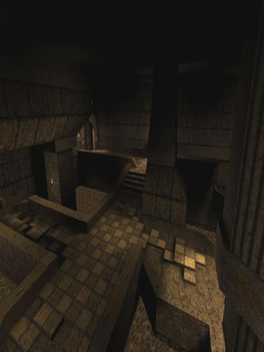
Based on Tronyn's Runezig map, this level represent a sort of Metagyptian environment. Medium to large Egyptian temple.Asylum of the Wretched
2000
Asylum of the Wretched is a single-level PWAD for Doom II for limit removing source ports. It was designed by Ian Myers and uses the music track "". The PWAD is notable for its horror theme and atmosphere, accomplished through the use of new graphics and sounds and a DeHackEd patch.Xuan-Yuan Sword 3: The Scar of the Sky
2000
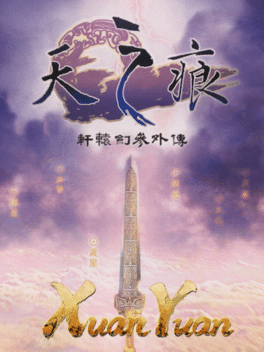
The Magic System is revamped in this game. All magics now belong to one of the five elements of metal, wood, water, fire, and earth in Chinese mythology. The game was released on December 2, 2000. A television series based from the game, produced by Chinese Entertainment Shanghai Limited, starring Hu Ge and Cecilia Liu, aired in 2012.NCAA Final Four 2001
2000
NCAA Final Four 2001
2000
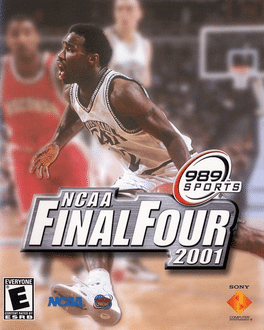
NCAA FINAL FOUR 2001 has all the standard game modes including Exhibition, Season and Tournament modes, and it also tracks season stats for both players and teams. The game has almost every Division I men's college teams and sports a fair amount of women's squads as well. The game also features the Touch Shooting Meter, so players will have even more control over their jump shots. Quinn Buckner handles the announcing duties and the sound really manages to capture that college game feel. If you get tired of playing the computer you can always take on a friend in the versus mode and take him to school.Soccer America International Cup
2000
For realistic footie action, strap on your cleats for Soccer America: International Cup. The latest to challenge FIFA and MLS for the crown of soccer champ, this rookie drives down the field and puts a few through their nets. The first in its series, Soccer America is coached by ten-year soccer gaming vets, and it shows in the sophisticated AI and blistering graphics. The full power of the PlayStation 2 is on show in 60-frames-per-second motion with motion-captured players animated down to their hair and shadows, all shown in action with nearly 50 different camera positions for soccer action right out of broadcast TV. 18 International teams and 32 American squads line up and shoot hard with bicycle kicks, fakes, and headers. Soccer America features a balanced Easy Play mode to let beginners get into the game, while pro fielders will find the sharp AI more responsive to your fancy moves on the turf than the average soccer sim. With a Multi-Tap (for PlayStation 2), up to four players can call their formations and driCode One Dispatch
2000
Code One Dispatch
2000
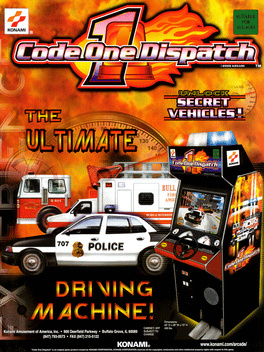
Konami arcade game from 2000. Players race against the clock in a variety of emergency vehicles to complete missions.Ill Natured
2000
Ill Natured
2000
iLL nATURED is a game made in RPG Maker 2000 by locus, also known as iLL rEBEL. Long ago, humanity discovered Venus's Bracelet, a ring of habitable planets. One of them, Allos, became a conflict zone as its native species, the Figinians, saw humans as a threat. The two races have been at war ever since. Flame and Melody escape from their native Torbexia, one of Allos's human slave colonies, in search of a new life—but they end up getting involved in the flames of a war that's beginning to unfold.DanceDanceRevolution Kids
2000
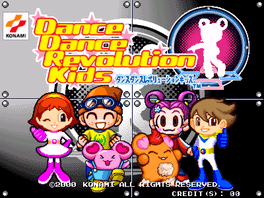
In December 2000, Konami released Dance Dance Revolution KIDS, which had a new cabinet and game specifically made for a younger audience. The game was never released outside of Japan. Today, very few of these cabinets are left.NASCAR Heat
2000
Looney Tunes Racing
2000
GB Harobots
2000
GB Harobots
2000
GB Harobots is a Role-Playing game, published by Sunrise Interactive, which was released in Japan in 2000.