New Games - Page 12310

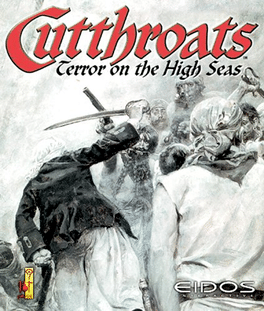
Cutthroats: Terror on the High Seas
1999
The game is set in the 17th century in the Caribbean and unlike most pirate games, it is mostly historically accurate. The game world is covered with settlements according to the time period the player picks at the start (and evolves accordingly as the game progresses) and each settlement is ruled by one of the five new world powers, Spain, England, France, The Netherlands and Denmark. Also some settlements are ruled at certain times by independent rulers, e.g. Tortuga and Belize. These settlements can be attacked by the player, meaning his crew, with weapons the player chose, will land at the town and can then be controlled to burn and pillage it. Other than this the player controls a ship unit upon a map of the Spanish Main and can plot courses to pins which represent towns; however, if an NPC ship is close enough to the player (these ships spawn at the settlements with goals such as trade between towns or to find pirates), the player will be alerted and go into a smaller bird's-eye map in which they can raise flGrand Prix World
1999
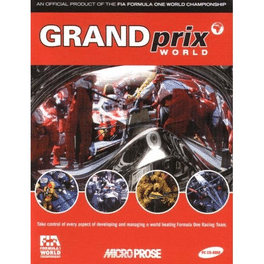
Grand Prix World
1999
Grand Prix World is the sequel to Grand Prix Manager 2 released in 2000. The game was designed and produced by Edward Grabowski Communications Ltd,[2] and Microprose. It is based on the 1998 Formula One season, and is officially FIA licensed.Space Invaders
1999
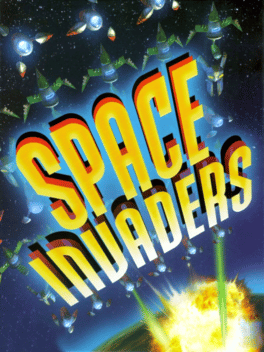
Space Invaders
1999
star 8.2Space Invaders is a game in which the player controls a laser cannon by moving it horizontally across the bottom of the screen and firing at descending aliens. The aim is to defeat five rows of eleven aliens—some versions feature different numbers—that move horizontally back and forth across the screen as they advance towards the bottom of the screen. The player defeats an alien, and earns points, by shooting it with the laser cannon. As more aliens are defeated, the aliens' movement and the game's music both speed up.Toy Commander
1999
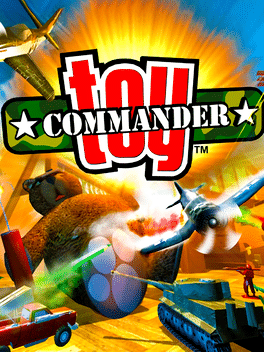
Toy Commander
1999
star 6In each mission, the player controls one or more toy vehicles to accomplish certain objectives. The objectives in each mission vary widely. In some missions, the player must drive an army truck and shoot things, in some it is necessary to fly helicopters to pick up and drop off objects, and in some the player races against computer-controlled vehicles.Xena: Warrior Princess
1999
star 6.2Die hard fans of the Warrior Princess now can now bring her along wherever they go, thanks to the release of XENA: Warrior Princess. Xena comes to the Game Boy Color with all the thrills and chills the fans of her TV show have come to expect. You take control of Xena as she does battle on land and in the water. Try to master fast-scrolling rides full of dangerous obstacles as you run, jump, climb, and swim your way through 16 pulse-pounding levels of heroic challenges. Use the Game Boy Color infrared ports to hook up with a friend who also has the game and you can unlock special hidden levels in each cartridge. This game could only be more fun if it came with your own chakram.Cyber Tiger
1999
Cyber Tiger
1999
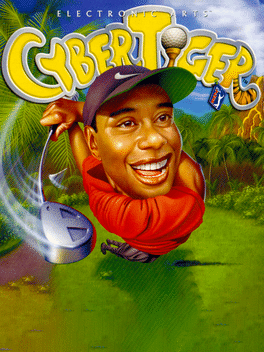
CyberTiger was a golf game released in 2000 with a career mode consisting of various tournamentsFreespace 2
1999
Freespace 2
1999
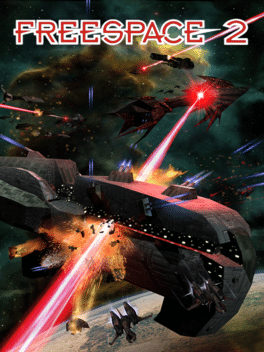
star 8The year is 2367, thirty two years after the Great War. Or at least what YOU thought was the Great War. The seemingly endless tide of Shivan capital ships, bombers and fighters with super advanced technology was nearly overwhelming.As the Terran and Vasudan races finish rebuilding their decimated societies, a disturbance lurks in the not-so-far reaches of the Gamma Draconis system. Your nemesis has arrived... and they are wondering what happened to their scouting party...The game continues on the story from Descent: FreeSpace, once again thrusting the player into the role of a pilot fighting against the mysterious aliens, the Shivans. While defending the human race and its alien Vasudan allies, the player also gets involved in putting down a rebellion of those elements of Vasudan (Hammer of Light) and Human (Neo Terran Front) forces which don't want to cooperate with one another.Flight Unlimited III
1999
Flight Unlimited III
1999
Flight Unlimited III is a 1999 flight simulator that recreates civilian aviation around Seattle, Washington. Players can freely explore or undertake challenge missions in accurately modeled aircraft, supported by real-time weather systems and detailed terrain rendering. Developed by Looking Glass Studios and published by Electronic Arts, the game expanded on its predecessor with enhanced physics and more aircraft options, though its commercial performance was limited with only 20,000 units sold in the US during its release year.Flanker 2.0
1999
Final Fantasy Anthology
1999
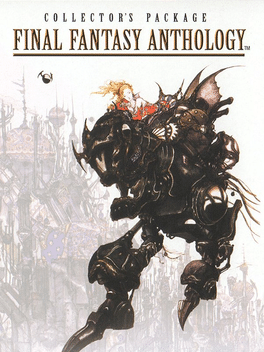
star 8Final Fantasy Anthology is a North American compilation of Final Fantasy V and Final Fantasy VI for the Sony PlayStation. The European edition comes with a port of Final Fantasy IV.Heroes of Might and Magic III: Armageddon's Blade
1999
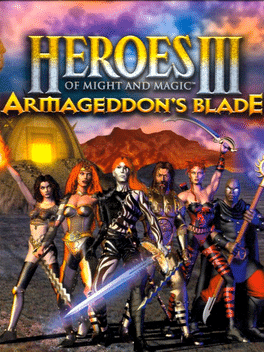
star 8.7Heroes of Might and Magic III: Armageddon's Blade is the first of two expansion packs for the turn-based strategy game Heroes of Might and Magic III.Age of Empires II: The Age of Kings
1999
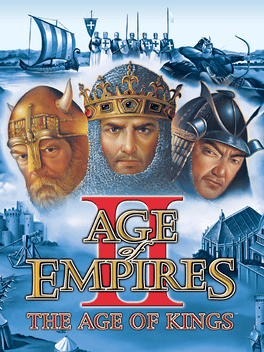
star 8.3Take control of a powerful civilization. Lead them through 1000 years of the Middle Ages to riches and greatness. Will you Intimidate the world into following you by using military force? Rule the world with honor and nobility by using commerce and diplomacy? Or Underhandedly seize power through conspiracy, deception and regicide? There are many paths to power, there can only be one ruler!Gauntlet Legends
1999
Gauntlet Legends
1999
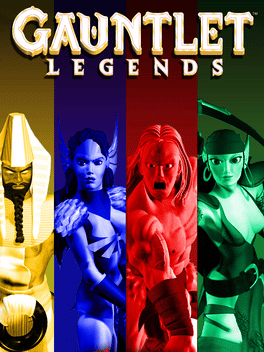
The first console version of Gauntlet Legends, released in September of 1999. This game introduced an inventory system that allowed players to stock and activate items after they were obtained, with a few exceptions (Invulnerability and Anti-Death Halo). This is also the first Gauntlet game to feature Sumner's tower and his shop. Four-player co-op is supported, but only by making use of the Expansion Pak.Black/Matrix Advanced
1999
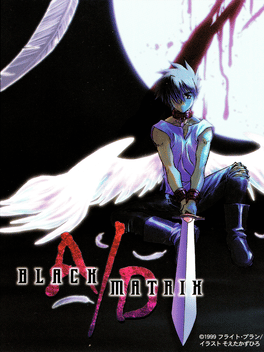
Black/Matrix Advanced is an enhanced version of Black/Matrix. The game is set in a world which is controlled by demons, who have defeated the angels after a prolonged war. You control Abel, an angel who serves a female demon master (which you choose among several available characters in the beginning of the game). You and your master develop deep feelings for each other, but then your master disappears, and you decide to find her at all costs. The Dreamcast release comes on 2 GDs (instead of the single CD of the original), and features many anime-style cutscenes that were not included in the Saturn version. Also, the story cutscenes which happen after the battle don't use the isometric battle engine any more, but are viewed from first-person perspective, with character portraits occupying a large portion of the screen. Other differences include the addition of two scenarios (12 instead of the original 10), a new difficulty level (Easy), different art for character portraits, several changes in battle locations, anMetal Gear Solid: VR Missions
1999
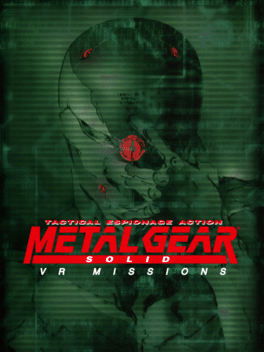
star 7Metal Gear Solid: VR Missions is an add-on disk that includes 300 missions, ranging from missions that are more advanced levels of the training missions in MGS to solving mysteries.Tony Hawk's Pro Skater
1999
star 7.6Take control of real skaters and perform strings of crazy tricks in the first entry of the long-running Tony Hawk skateboarding series.Gex 3: Deep Cover Gecko
1999
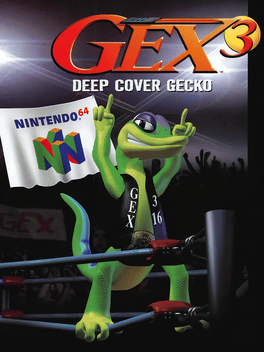
When Gex is watching TV one day, he discovers that Rez has kidnapped Agent Xtra (the agent from Gex: Enter the Gecko's backstory), head of the TV Terrorist Defense Unit, to get to him. He teleports to the batcave-like lair he has in the Media Dimension, and begins another adventure. Each level parodies a certain aspect of television culture (here the levels exist as stand-alone channels). Gex enters each level through a television set. He must collect remote controls to advance to the next level in order to complete his mission and rescue Xtra. This N64 port removes some suggestive content.Petz 4
1999
Petz 4
1999
Petz consists of Dogz 4 and Catz 4. Dogz and Catz are virtual petz that live on your computer. Players can adopt, raise, care for and breed their own Catz and Dogz. This title introduced companion Bunnies and Pigs, as well as travel playscenes.Dogz 4
1999
Dogz 4
1999
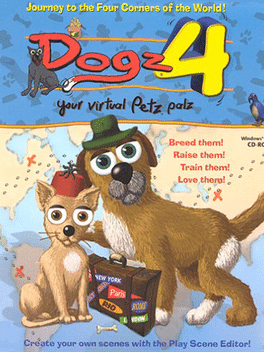
The world-famous virtual Petz palz are back on your computer and now they're ready to travel the world. Train and play with your Petz in great new scenes. Voice Recognition adds a whole new dimension of interaction with your Dogz. Explore four exciting new lands with your Dogz: Gypsy Carnival--travel through time and space to Eastern Europe where you train your Dogz to perform tricks under the Big Top in the Gypsy Circus; Wild West--watch out for tumbleweeds as your Dogz amble down the dusty street in the Wild West; Arabian Desert--the intrigue of Arabian Nights calls for you and your Dogz as you uncover the mysteries of the desert Oasis; and Winter Wonderland--play in the outdoor Winter Wonderland where sledding is a must and hot soup is a welcome treat.