New Games - Page 12257

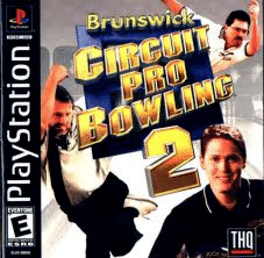
Brunswick Circuit Pro Bowling 2
2000
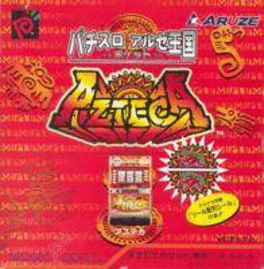
The sequel to Brunswick Circuit Pro Bowling, released exclusively for the Playstation.Pachi-Slot Aruze Oukoku Pocket: Azteca
2000
A Pachi-Slot game in the Pachi-Slot Aruze Oukoku Pocket series.Evolution: Eternal Dungeons
2000
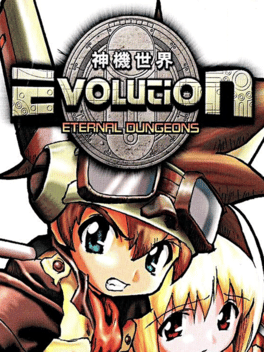
Evolution: Eternal Dungeons is a conventional turn-based role-playing video game for the Neo Geo Pocket Color. It was released in Japan and the United Kingdom in 2000. Probably due to the large amount of text, separate cartridges were produced for the different regions it was released in, rather than allowing the player to choose the game language on the same cartridge. While the Japanese version is somewhat common, the English version is not. This game is essentially a port of its three dimensional counterpart for the Dreamcast. To accommodate downscaling for the Neo Geo handheld, the 3D graphics of the original were replaced with top-down two-dimensional maps and 2-D sprites. Both the Japanese and UK version of the game were released in hard plastic boxes rather than soft cardstock. The English translation has frequent grammar and spelling errors.Chou Aniki: Otoko no Tamafuda
2000
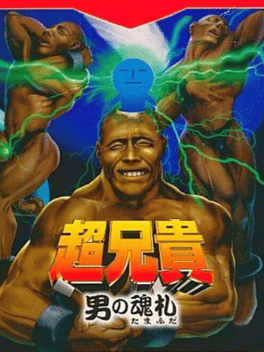
So far, shooting and fighting action has been the staple of the Cho Aniki series, but now it has advanced into the card battle game. A battle of muscle, protein and men, it will be waged in the WonderSwan. Bring the power to a maximum and discover love, sweat and muscle. Returning to the music, is Mr. Koji Hayama, a man who has become legend for his original Cho Aniki score. It is time to use your brains and muscle !!Vagrant Story
2000
Vagrant Story
2000
star 8.2Adventure into a world of unparalleled depth and danger with SquareSoft's Vagrant Story. In this sweeping dungeon-crawling epic you play as Ashley Riot, a young assassin and spy for the organization known as Riskbreakers. Your goal is to unravel a deep and twisted plot and come to terms with the recent death of your wife and child. If this sounds a bit too cerebral never fear. Your path to recapturing your sense of humanity hinges on the destruction of countless vicious monsters and the exploration of dark and dangerous dungeons. Vagrant Story is awash in gorgeous scenery and features designs from Yasumi Matsuno and Akihiko Yoshida, the acclaimed artists and creators behind Final Fantasy Tactics.NHL 2K
2000
NHL 2K
2000
NHL 2K is a series of hockey games by Visual Concepts for the Dreamcast, PlayStation 2, Nintendo GameCube, Xbox, iPhone, Xbox 360, PlayStation 3, and the Wii. Initially discontinued after the release of NHL 2K11 in 2010, the brand was revived on mobile devices in 2014. The games are officially licensed from the National Hockey League and NHL Players Association. While its games were released on consoles, its main competition was EA Sports' NHL video games.Disney's Activity Center: Winnie the Pooh
2000
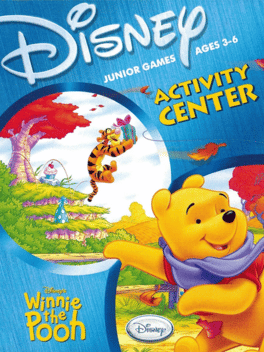
Winnie the Pooh and the Blustery Day: Activity Center is a PC game from 2000. Winnie the Pooh's Activity Center is a wonderful way to entertain your child on a rainy day; with six different activities at three different difficulty levels, kids of all ages can enjoy time spent inside. Also included is the animated storybook Animated StoryBook: Winnie the Pooh and Tigger Too, which offers more fun games and reading activities. In the Winnie the Pooh's Activity Center, a friendly narrator greets you on "a blustery day." He presents activities such as Eeyore's house hunt--help Owl to find a new home; Heffalumps and Woozles--match the characters in Pooh's dreams; and Fly a Piglet--prevent Pooh and Piglet from running into trees and stumps. You may also choose to read the interactive book of Winnie the Pooh and the Blustery Day, which introduces different activities as you read the story along with the characters.Petrin
2000
Keyboardmania
2000
Keyboardmania
2000
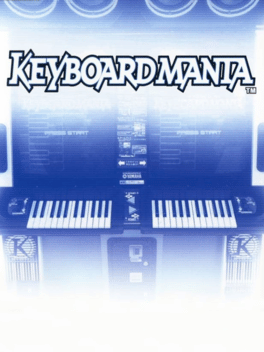
Keyboardmania (alternately KEYBOARD MANIA, and abbreviated KBM) is a rhythm video game created by the Bemani division of Konami. In this game up to two players use 24-key keyboards to play the piano or keyboard part of a selected song. Notes are represented on-screen by small bars that scroll downward above an image of the keyboard itself. The goal is to play the matching key when a note bar descends to the red play point line. The arcade cabinet has two screens - one for each player.Dokodemo Hamster
2000
Dokodemo Hamster
2000
In this game, you are the owner of a hamster. Your hamster is inside a cage, and is living its life in real time, regardless of your actions, walking around, sleeping, etc. However, you can do many things to help your hamster feel better. There is a list of topics you can "discuss" with the hamster: for example, you can order it to run inside a wheel, or ask it whether it is hungry or not. You can feed it some typical hamster food, clean the cage from time to time, and even write e-mails to your hamster. Depending on your actions the disposition of the hamster will change.The Railway Station
2000
The Railway Station
2000
The Railway Station is a short to medium sized level centered around none other than a railway station - and of course it's populated by alien scumRemote Presence
2000
Remote Presence
2000
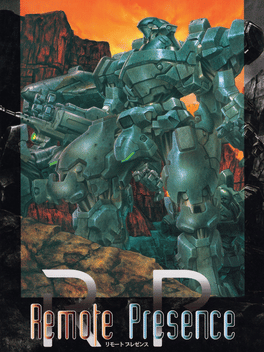
A strategy game, developed and published by Shuwa System, which was released in Japan in 2000.The Sims
2000
The Sims
2000
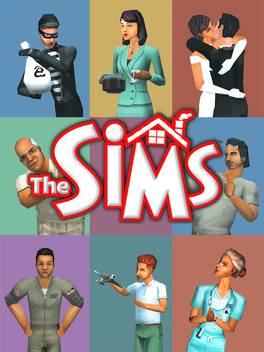
star 8.2The Sims is a life-building simulation with emphasis on intimate details of individual characters rather than expansion of an entire society or civilization. You are in control of nearly every aspect of the lives of the individuals who make up your chosen population in the neighborhood. Characters are developed from the ground up and you infuse and mold them with personalities, looks, desires, moods, urges, living arrangements, career and personal choices, life styles, and reactions.Biohazard Code: Veronica - Limited Edition
2000
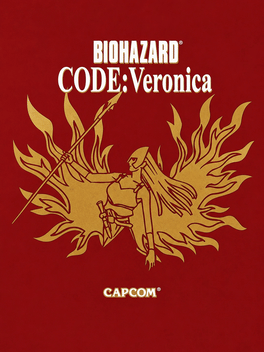
Limited edition version with slipcase, exclusive to Japan. Resident Evil Code: Veronica is the fourth video game in Capcom's Resident Evil survival horror series. The game continues the survival horror gameplay of its predecessors: the protagonist explores the surroundings, fighting monsters and solving puzzles. However, it is the first game in the series to do away with pre-rendered backgrounds using a fully polygonal 3D engine instead, which allows for features such as real-time lighting and camera movement. Still, such movements are only used sparingly, and the use of perspective is mostly unchanged from earlier installments: the camera automatically switches to different static angles showing protagonists, monsters and rooms from different spooky viewpoints.Dance Dance Revolution: Dear Daniel
2000
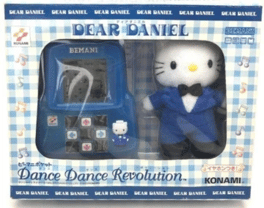
Dance Dance Revolution: Dear Daniel is a Bemani Pocket Hello Kitty/Dance Dance Revolution game based on the character of Dear Daniel.Fishing Freaks: Bass Rise Plus
2000
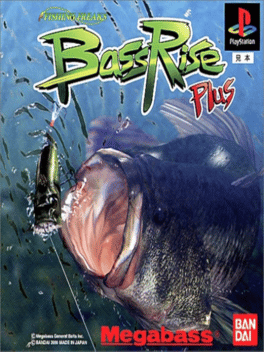
Bass Rise is a hyper-realistic fishing game featuring: Twelve levels and up to four players! Underwater views for maximum play! Customized fishing trips! Three different types of fish! Adjustable reel speed and three line weights! Hundreds of Megabass lures! Compatibility with DUAL SHOCK analog controller! Hidden lures and lakes!Crazy Climber 2000
2000
Crazy Climber 2000
2000
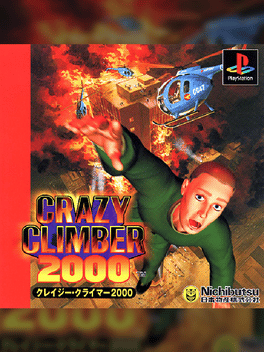
In 1980, Nichibutsu released Crazy Climber, in which players control a man attempting to scale a series of buildings using only his hands and feet, while avoiding a series of falling objects, mostly thrown by the building's tenants. Crazy Climber 2000 takes the game play of the original and gives it a sweeping graphical makeover. The object is again to scale buildings while avoiding the falling objects thrown at you by its tenants, as well as windows that close on your fingers. The buildings themselves are laid out differently In the first stages, for example, the buildings start out as square skyscrapers. Later levels, however, require you to scale round ones. As well as this, new threats are introduced, such as: - Circling vultures that throw eggs at you. - Gorillas reaching out to grab you on both sides of the building. - Window cleaners that go from left to right, making you fall if you get in their way - Boulders thrown from elevators CC2000 also allows you to move from one face of the building to another.Addie no Okurimono: To Moze from Addie
2000
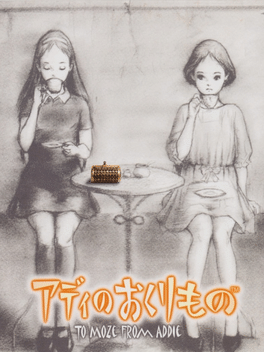
Addie No Okurimono: To Moze from Addie is an adventure puzzle game made by Sony in 2000, the game features a story mode in which the player controls a female character that have to solve different kind of puzzle to advance through the adventure. During the game she also will find different characters to interact in a world with an interesting & unique atmosphere.Jet de GO! Let's Go By Airliner
2000
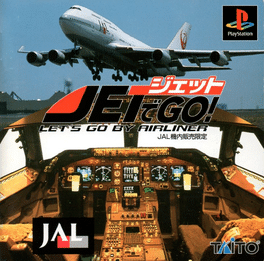
Jet de GO! is a spin-off from the famous Densha de GO! series by Taito. Instead of trains, this title focus exclusively on flying planes. Players can take off and land with a Jetstream 31 turboprop, a mid-range Boeing 767 or a long haul Boeing 747. The game modes include Flight mode, Cruise mode and Lesson mode.G1 Jockey 2000
2000