New Games - Page 12267

Dispel
2000
Dispel
2000
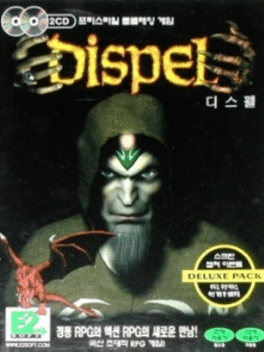
After the War of the Gods, a kingdom called AESH was in continent of DMAN, which was under the control of two overlords, the King and the Priest. Over time, DMAN was divided into three kingdoms (AESH, YAMM, SHEREG), and people longed for an imperious and strong ruler to maintain peace in DMAN. The game takes place in the fantasy continent of Dman where after war and political corruption monsters came out of hiding and terrorize the people. The protagonist, or player's character is a beginner adventurer. The game uses an isometric diagonal-down view.Pompei: The Legend of Vesuvius
2000
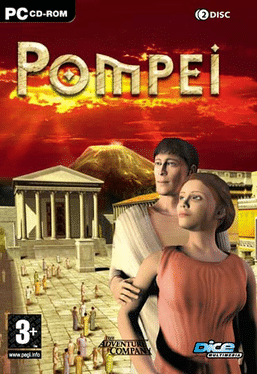
Pompei: The Legend of Vesuvius (aka TimeScape: Journey to Pompeii) is a 2000 historical adventure game. It followed by a sequel, Jerusalem: The Three Roads to the Holy Land. When an explorer and world famous cartographer by the name of Adrien Blake returns from an expedition he discovers that his fiancée, Sophia has disappeared. Wrought with grief Adrian immerses himself in his manuscripts and reveals an ancient curse placed on him by the goddess Ishtar. Blake must go to 79AD Pompei, where a volcano will erupt in four days time, destroying the city, and find Sophia.Disney's Magic Artist Studio
2000
Disney's Magic Artist Studio lets you draw, paint, and create animations with your favorite Disney characters. Create, animate, and print your images with tools and paints that burst onto your screen. Roses sprout from your canvas, and butterflies soar through 3-D paintings virtually dripping with color. Disney character images dance to disco, rock, classical, and island beats.TNN Outdoors Fishing Champ
2000
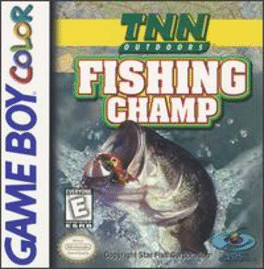
Get out the rod and reel, because the challenge of fishing can now be put into the palm of your hand thanks to TNN OUTDOORS FISHING CHAMP. Play in the Free Fishing mode to get a feel for the game controls and learn how to reel-in the big one. When you want to test your mettle, try to become the undisputed fishing champion in the Tournament mode. You will have to travel to six different tournaments and catch a predetermined number of a specific kind of fish to stay alive in each. If your friends are fishing fanatics, you can challenge them and see who can catch the most fish in an hour. In all of the modes, there are over 30 different varieties of fish to catch including bluegill, catfish, walleye, rainbow trout, lake trout, and largemouth bass. Play TNN OUTDOORS FISHING CHAMP and have a fish tale to tell your friends.NASCAR Challenge
2000
NASCAR Challenge
2000
The thrill of victory and the agony of smashing into another car comes to the Game Boy Color in NASCAR CHALLENGE. Hop in and take on the best NASCAR has to offer including Jeff Gordon, Dale Jarret, and Rusty Wallace. Try to master Topeka, Sonoma, and Seneca raceways in the Practice mode, and when you're ready for some competition, try to survive six laps on any of the tracks. To prevail in the championship, you will have to try to win the pole position on each track and beat the pack to the finish line. Depending on how well you finish in each race, you are awarded points. The driver with the most points at the end of all three races is declared the champion. Can you handle all of the excitement and action in NASCAR CHALLENGE?Puzzle Master
2000
Puzzle Master
2000
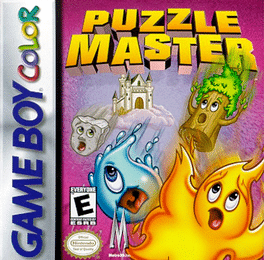
The Goblin King has corrupted the elements and is flooding the world, and it's up to you to save it. Groups of four elements fire, water, stone, and wood fall from the sky. You must position the elements in such a way that three of the same type touch each other, and are thus eliminated. However, there are some complicating factors: monsters will appear on the play field and will throw pollution blocks that cannot be removed. Further, each round has some tasks which range from watering a flowerpot to triggering a drawbridge that will eliminate several rows which need to be completed.Gex 3: Deep Pocket Gecko
2000
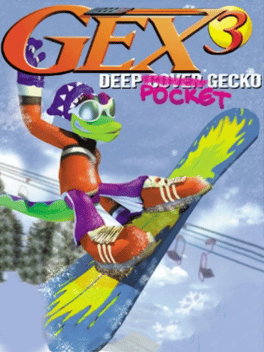
Even a lost island hideaway in the wet South Pacific isn't far enough away from the long arm of Rez. While GEX was whiling away the hours living on the fruits of his recent successes, the madman of the Media Dimension was working on his new hobby - secret agent-napping. Agent Xtra was now struggling for her freedom as a hostage in the lair of Rez. As a master of disguise, GEX had his work cut out for him. Another descent into bad TV movies is at hand. To the GEXCaves!NBA Show Time: NBA on NBC
2000
Take on all of the action of two-on-two basketball with no rules in NBA SHOWTIME: NBA on NBC. Choose from all 29 NBA teams, featuring over 100 professional players then hit the hardwood and work on your moves in the Practice mode. When you want some competition, work your way through the Season to the Championship. If you don't want to bother with the Season, skip it, and leap right into the Playoffs. With over 30 different slam-dunk animations, you are going to see something new every time you play. If you can get a player to sink three buckets in a row, watch him light up the scoreboard while he is on fire. If you enjoy wild basketball action, you will love the action in NBA SHOWTIME: NBA on NBC.Déjà Vu I & II: The Casebooks of Ace Harding
2000
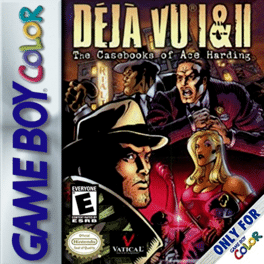
Take on two thrilling mysteries in one Game Pak! Life is never boring when you assume the role of Ace Harding, private detective. In Deja Vu I, you will scramble down the dark alleys of Chicago, searching for a cure for you amnesia and a killer who has framed you for a brutal murder. After solving the first case, you'll uncover a few loose strings that gradually unrabel into Deja Vu II. Trapped in the slimy town of Last Vegas, you find yourself dealing with a notorious mob leader who makes you an offer you can't refuse. -Two detailed graphic adventure games in one Game Boy Color Game Pak! -Detailed commands for interacting with anyone or anything! -Return to the scene of the crime, or any of the other 140 locations! -Sort out the real evidence from the red herrings and over 80 other items! -Battery-backed save option for up to three save game files!Neo Baccarat
2000
Neo Baccarat
2000
Neo Baccarat is a Miscellaneous game, developed by Dyna Corporation and published by SNK, which was released in Europe in 2000.Dynamite Slugger
2000
Dynamite Slugger
2000
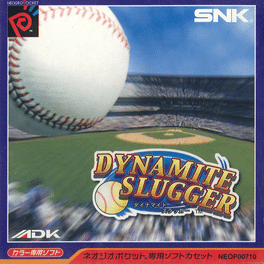
Dynamite Slugger is a video game. It was released in 2000 for the Neo Geo Pocket Color handheld game console. The game is similar to other Baseball videogames on the Neo Geo Pocket Color such as Baseball Stars and Baseball Stars Color. Due to Dynamite Slugger being the latest baseball videogame to be released for the Neo Geo Pocket Color it features better graphics than other sports titles.Pocket Reversi
2000
Pocket Reversi
2000
Pocket Reversi is a Miscellaneous game, developed and published by Success, which was released in Japan in 2000.The Last Blade: Beyond the Destiny
2000
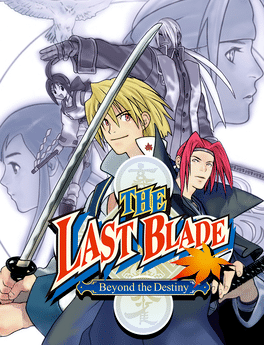
1863. History's hidden secret is revealed. During the age known as "Bakumatsu", 135 years ago, chaos rules! It's all yours: A new type of weapon fighting game in which Power and Speed weapons, in addition to various Repel moves can be used to experience a new sensation in video game thrills!Delta Warp
2000
Delta Warp
2000
Delta Warp is a Miscellaneous puzzle game, published by Iosys for the Neo Geo Pocket Color, which was released in Japan in 2000.Big Bang Pro Wrestling
2000
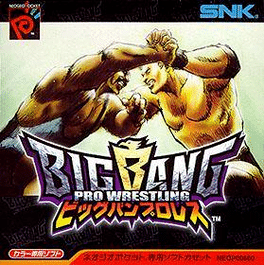
Only a handful of top wrestlers can be show their face on the TV for their fans at home. In the I.E.W mat, this rule is no exception. In an event practiced for 300 years, only the best performances are in demand. This year, the great king of the I.E.W, Joseph Steel, returns to defend his throne. The story of eight top wrestlers competing for the greatest prize on the ring, the I.E.W champion belt, is about to begin...Koi Koi Mahjong
2000
Koi Koi Mahjong
2000
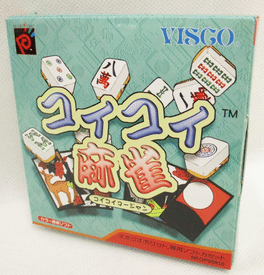
Koi Koi Mahjong is a Miscellaneous game, developed and published by Visco, which was released in Japan in 2000Mezase! Kanji Ou
2000
Mezase! Kanji Ou
2000
Mesaze! Kanji-Ou is a Miscellaneous game, published by SNK, which was released in Japan in 2000.Nightmare in the Dark
2000
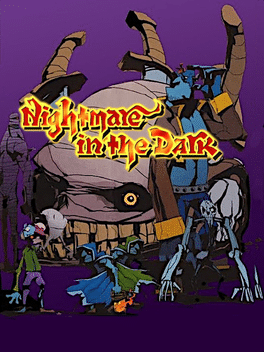
There lived one gravedigger at a very small village in a remote region. He lived a quiet, solitary life in a corner of the cemetery. He kept away from the village people due to his very ugly appearance. One day, he found the graves were ransacked and some corpses were stolen. He didn't want the village people to find out, so he decided to eliminate the grave burglars by himself. Thus, he patrolled the cemetery every night. A good ghoul goes around graveyards protecting them from evil doers. The player clears the area and collecting power ups using it to eliminate the enemies. There are five stages with five levels each, and each one of them has you throwing fireballs at ghouls, ghosts, goblins, and zombies. When you keep throwing fireballs at these enemies, they will ignite into a giant fireball, which you can throw at other enemies to kill them, and get the remaining treasure before moving on to the next level. At the end of the fifth level, a boss must be defeated in order to continue the game.Gals Panic S2
2000