New Games - Page 12456

Gradius II
1998
Druid: Yamie no Tsuisekisha
1998
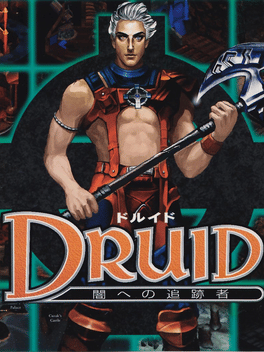
The world of Navan has many islands, and four of them are reigned by the powerful Druid brothers: Lawson, Curak, Havnar, and Astor. They worship different deities and try to maintain the harmony of nature on their islands. But one day, Lawson mysteriously disappears. Unable to solve the mystery, the brothers seek out you, a grandson of a once powerful Druid, to search for Lawson in the entire world of Navan. The gameplay of Druid is somewhat similar to that of Ultima VIII: Pagan. It is an action RPG with simple point-and-click interface and action-oriented combat. You can execute two different types of physical attacks (high and low) and cast a variety of spells. You don't have a party in the game.Antarctic Adventure
1998
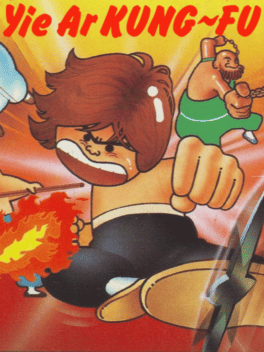
Yie Ar Kung-Fu
1998
Egg
1998
Egg
1998
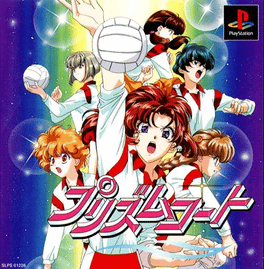
A unique competitive god-game/golf-sim hybrid. Can be played with up to 4 players. Egg is a Strategy game, area-claiming game which involves almighty god-eggs.Prism Court
1998
Choro Q 3
1998
Choro Q 3
1998
Choro Q 3 is a Racing game, developed by Tamsoft and published by Takara, which was released in Japan in 1998.Ultraman Fighting Evolution
1998
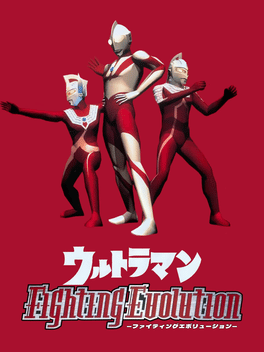
Ultraman Fighting Evolution (ウルトラマン ファイティングエボリューション Urutoraman Faitingu Eboryūjyon) is a fighting game. It was developed and published by Banpresto. It was the first Ultraman Fighting Evolution series game, spawning many sequels.Konami GB Collection Vol. 4
1998
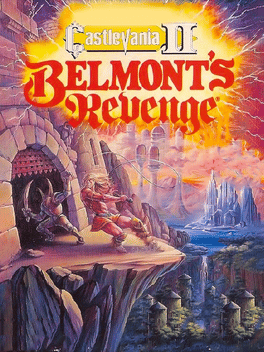
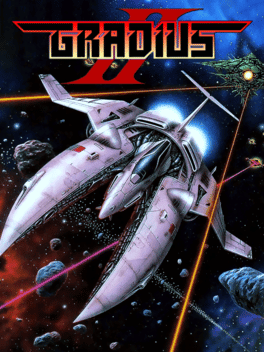
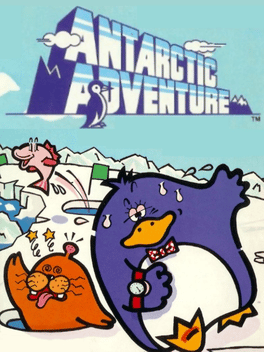
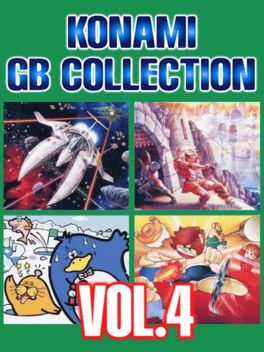
The Konami GB Collection is a series of video game compilations for the Game Boy Color. The compilations were originally released from 1997 to 1998 in Japan for Game Boy, and were later released in Europe in 2000 for Game Boy Color. Included in Volume 4: - Gradius II: The Return of the Hero (Gradius: The Interstellar Assault) - Castlevania II: Belmont's Revenge - Yie Ar Kung-Fu - Antarctic Adventure This was released as Volume 3 in Japan.Marby Baby Story
1998
Marby Baby Story
1998
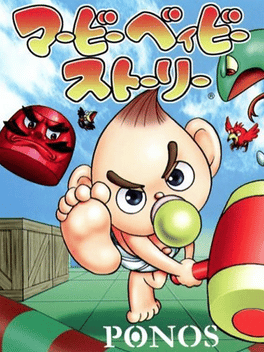
Marby Baby Story is a game in which the player controls Marby, a baby trapped in a mysterious maze and have to help him to get out.NBA in the Zone '98
1998
NBA in the Zone '98
1998
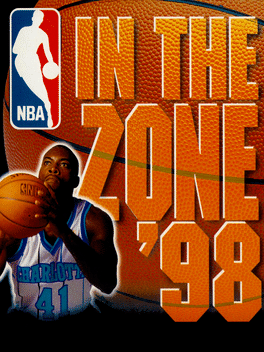
NBA IN THE ZONE ¿98 is a traditional five-on-five basketball game that follows the lead of its predecessors, NBA IN THE ZONE and NBA IN THE ZONE 2. In the original game, the emphasis was on an arcade look and feel. NBA IN THE ZONE '98 advances the series' evolution by leaning towards more of a basketball simulation. New options include an on-the-fly play-calling system as well as statistical tracking, which not only keeps season stats but also charts league leaders in various categories. You can also take on a friend in Versus mode and see who is really in the zone; with two multitaps, up to eight people can play at one time.SatellaWalker 2: Moku-moku Kemuri Panic
1998
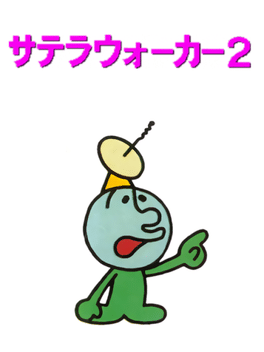
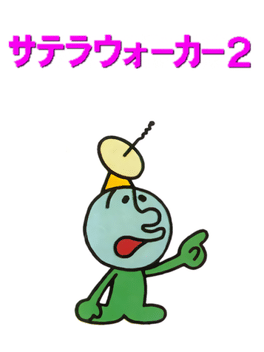
SatellaWalker 2: Moku-moku Kemuri Panic is the first part of SatellaWalker 2, released in 1998 for the Satellaview, with SoundLink support.SatellaWalker 2
1998
SatellaWalker 2
1998
SatellaWalker 2 (「サテラウォーカー2」) is a downloadable 2-part Soundlink game for the Satellaview that was broadcast between February 15, 1998 and February 28, 1998. SatellaWalker 2 was broadcast as the sequel to the earlier-broadcast SatellaWalker (「サテラウォーカー」) of July 1997.Tun Town
1998
Tun Town
1998
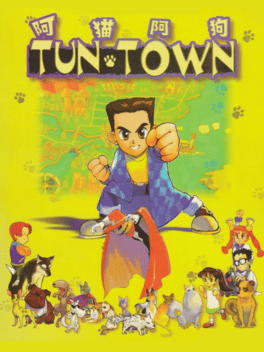
The story of Tun Town takes place in the small town of the same name. The student LeLe returns to Tun Town during the summer holidays. He discovers that there is a war going on between dogs and cats. Under leadership of the Cat King, the cats have defeated the dogs. LeLe and his friends unite the dogs and beat Cat King to bring back peace to the town. But the gangs in the big cities also want control over the town. Lele, his dog friends, Cat King and the cats form an alliance to fight and defend their hometown. Tun Town is a Chinese-made role-playing game. The gameplay system is similar to that of Japanese-style RPGs, with party management, simple turn-based battles, and automatic leveling up. It is possible to collect parts to build different kinds of weapons in the game. The visuals are cartoon-like, and the plot has humorous elements.Ankh: The Tales of Mystery
1998
Ankh: The Tales of Mystery is a 3D point-and-click adventure game set in Cairo, Egypt, 500 BC. The player controls the boy Domi Rhadjif who is tasked by his father to help him out with a number of errands, even though there are a number of terrorists outside his house, anachronistically armed with automatic guns. Eventually, Domi has to rescue a princess, deal with the god Osiris, and get rid of the Lybian terrorists. Despite the Egyptian setting, there are numerous modern elements and items used for comical effect. The game uses a classic point-and-click interface. The mouse is used to move around and actions (Use, Look, Pick up, Talk, Give, and Open) can be selected at the bottom of the screen. Domi can pick up various items and store them in an inventory, shown in the bottom right of the screen. It is possible to talk to NPCs and select from multiple dialogue options.Labyrinthe
1998
Sadistic Medicine
1998
Sadistic Medicine
1998
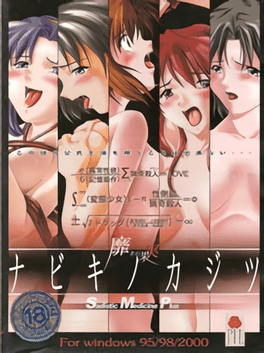
A big pharmaceutic company develops a new medicine and sets experiments first on animals, then on humans. It seems to be a revolutionary aphrodisiac.